Le Petit Prince ~ Review


I finally found time to watch the film of “The Little Prince” and it really didn’t disappoint. I was intrigued with how it stuck to the original storyline and how they developed the idea of the prince growing up in the real world, how society had affected him and how these characters he had met on the planets were manifested in modern society.

Many of us can relate to the girl in the film, who is pressurised to conform and grow up to be a responsible and hard working adult with good academic achievements. Her neighbour ‘the pilot’ deviates from this and allows her to explore her ‘creative’ and free state of imagination without the constraints, timetables and rigid structure her mother lays out for her.

The animations were captivating, with many touching points that really pull at the heartstrings. No doubt there are many instances where the characters drift apart/must say goodbye to one another. But, it is all part of life.

Some morals I learnt from watching it:

1. Everything lives on in the heart even if you can’t see it anymore

2. It’s okay to deviate from rigid rules, and yet pursue what you want through seeing it in a different light. Never dream too small, and always maintain the childishness and innocence in you. Be brave.

The fox is also pretty darn cute too!

swirl-divider4

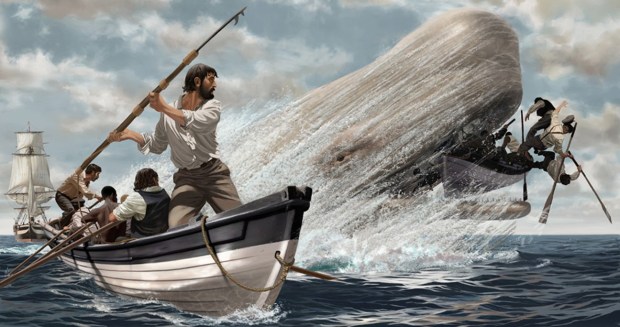
Moby Dick ~ Our love/hate relationship

maxresdefault

Moby Dick- this is a chronicle of our love hate relationship. Yes, I first met you during my years at university, and yes somehow I managed to get an ‘A ‘ grade without having properly read you. Yes, I feel bad about this. So, last week I decided to give my many hardbacks a break to attempt to rekindle our rocky relationship. I hope you forgive me for this.

I can’t deny that Moby Dick is great for analysis. The themes touched upon such as the desperation of humanity, of unadulterated revenge, of survival, of kinship, the juxtaposition between light and darkness & good and evil through the representation of the ‘whale’ and the fierce and seaworthy captain Ahab mourning over the loss of his leg. There are so many things you can discuss – making it no doubt one of the enduring pieces of English literature. (Thank you online resources for getting me through this period)

So, why am I finding it so difficult to read?? I endured, I persevered, I rarely gave up, it’s chapter 32 and that’s it- I’m gone. There is humour, there’s great character portrayal of the narrator Ishmael’s anxiety over his meeting with his ‘soon to be’ close brother and companion Queequeg. Even then, it shows the bonds and true friendship that transcends race, situation & religion. The characters know the fragility of life; “I know not all that may be coming, but be it what it will, I’ll go to it laughing.” There are quotes that are absolutely memorable and really help to set the scene;

  • “For there is no folly of the beast of the earth which is not infinitely outdone by the madness of men.” 
  •  “It is not down on any map; true places never are.” 
  •  “Then, there you lie like the one warm spark of an artic crystal”.
  •  “To produce a mighty book, you must choose a mighty theme. No great and enduring volume can ever be written on the flea, though many there be who have tried it.” 

That last one is something to think about!

The novel is heavy with words. I would be lying if I said I understood it all, and I have read a fair few literature books in my time. Some chapters tended towards philosophical/religious references to biblical characters & heavy with analogies (even Ishmael, Ahab- many names are carefully chosen for the purpose of contrasting their biblical counterparts) not to mention defined textbook jargon of the anatomy of whales/and the whaling industry. Like many 19th Century literature it undoubtedly takes time and perseverance on the reader’s part to sift through outdated terminology and phrases, yet all I can say, is that the more you read, the quicker- and easier it gets.

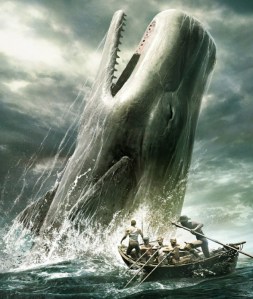
moby-e1423396055437

There may be a time, perhaps when I am stranded with nothing but ‘Moby Dick’ as reading material I may endeavor to try and renew my complicated relationship with it. Perhaps I may even reach chapter 60. But for now, I will close your lovely turquoise leaves (the drop cap covers are truly stunning- stunningly bright) and replace you on the bookshelf, just like Matilda at the end of the movie…until next time, friend or foe.

Would I recommend this to others? Probably. Am I crazy? For sure. Because it’s still a great book, and like genres of movies you reach for at HMV, choosing a suitable novel for you is exactly the same thing.

Good luck 🙂

swirl-divider4


Oyster

OLYMPUS DIGITAL CAMERA

swirl-divider4

It is the yolk of a pearlescent oyster,

A Viennese swirl baked to a slow caramelisation;

It hurls itself over the broken edges of peaks, smashed like egg shells, sculpted in marble.

The cracked tiles of the village are doll houses in miniature,

you can cut the clouds with a knife, spread it on the plains like a dollop of thick cream.

Molten metal cannonballs shot in rose gold.

swirl-divider4

Copyright © 2016 by Kate W J White (All Rights Reserved)


~ Ink ~

OLYMPUS DIGITAL CAMERA

They swarm on the breath of a midnight shadow

glossy with the ink of stolen dreams.

Faster, towards a hurricane’s spinning wheel, faster-

draining the sky of its sapphire violet and dying sunset,

of fresh rain sliding down a windowpane.

As shredded paper, they settle on the hillside; paralysed.

Beautiful, stripped, like a shooting star.

Twinkling, as lost treasure under the ocean,

Arching in a slow cruise, their feathers burn to ash

and are taken.

Below, in fields the colour of squeezed limes, strawberries tremble in anticipation

until even the broken sky brushing their cheeks

~ matter no more.

swirl-divider4

Copyright © 2016 by Kate W J White (All Rights Reserved)

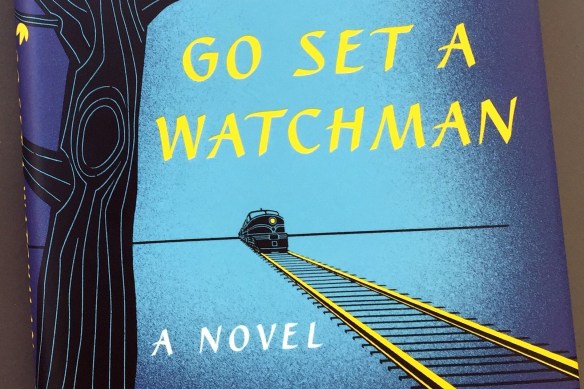
Go Set A Watchman

GSAW

It is by no means considered a real sequel to TKAM (To Kill a Mockingbird) so like me, I went in without any expectations but interest as to why it received such controversy. I understand why some may think this novel is incomplete, or insubstantial. The ending is abrupt and people uproared against the portrayal/change in the much loved Atticus Finch. But if you wanted an epic saga then you had better read Lord of the Rings. Imagine it more of a snapshot of an internal conflict that occurs within Scout. It shows reality. It is real life, the change in society; history repeating itself.

Let’s face it, as we grow up we face multiple harsh realities. It’s like a slap in the face. We end up re-evaluate our past beliefs, (How can this be? The veil has been taken away and you see the world for what it is- with all the ugly, complicated and messy truths. Were we blind?) Like Scout (Jean Louise) our constructed world can be shattered when we realise what we once held so dear- our morals, events in our childhood; are not black or white, but simply the hues of grey in between.

Maybe it was never complete to start off with, and we need a certain level of maturity to truly see things as they really are.

Scout struggles hard. As a child she put her father Atticus Finch on a high pedestal, revering him almost as a God. Basing her sense of right and wrong, of morality, justice on the way he had taught her. That all people are equal, individuals. Yet when she returns home, she finds the town in political turmoil, she is disgusted to witness her close family/friends taking part in an act she views as a betrayal. Maycombe is not as it once was and she is physically sick when she cannot process the information for what she believes to be hypocritical behaviour.

“On any other day she would have stood barefoot on the wet grass listening to the mockingbirds’ early service; she would have pondered over the meaninglessness of silent, austere beauty renewing itself with every sunrise and going ungazed at by half the world. She would have walked beneath yellow-ringed pines rising to a brilliant eastern sky, and her senses would have succumbed to the joy of the morning.

It was waiting to receive her, but she neither looked nor listened.”

 You could argue that since TKAM Atticus Finch does not change, only more of his character is revealed through the eyes of his daughter. He maintains a sense of justice, his actions ‘to see the man behind the mask’ (to see the harm he can do) and his awareness of race arguably still make him a moral man.

“But a man who has lived by truth—and you have believed in what he has lived—he does not leave you merely wary when he fails you, he leaves you with nothing. I think that is why I’m nearly out of my mind.”

Harper Lee intentionally wrote ‘Go Set a Watchman’ with Jean Louise’s ‘childlike voice’ to address such a complex issue (perhaps a link to TKAM) The young and naïve Scout is still within her 26yr old self. She is strong, passionate and upholds her belief no matter who she stands against. That is something to be admired. But, you can definitely hear the little, petulant girl in her- she doesn’t listen to reason and believes her truth is the only one, as…that’s all she’s ever known.

 “Had she insight, could she have pierced the barriers of her highly selective, insular world, she may have discovered that all her life she had been with a visual defect which had gone unnoticed and neglected by herself and by those closest to her: she was born colour blind.”

Scout learns to uphold her ‘identity’, and accept that everyone is free to act as they see fit, it does not make them any less moral, only more human.

Personally, I enjoyed the quick to read writing style, it’s humour, rhetoric and clever analogies iconic of Harper Lee. It’s been a while since I read TKAM (I honestly had to wiki the plot to remind me) Though the ending confused me a little with it’s politically heavy  and heated dialogue (it seemed like the characters knew more than they were letting on to us, and moved on rather quickly) I enjoyed the first 3/4. It is a complex novel that has many discussion points, so definitely something to re-read! I would still give it 4 stars.

Let me know what you think 🙂

swirl-divider4


~ ‘Perfume’ the story of a murderer~

perfume

Jean Baptiste Grenouille is a name not easy to forget. His unique job is to obtain, categorize, replicate and produce his very own human scent beyond the realms of scientific discovery. To me, the concept in itself was captivating….

“Odours have a power of persuasion stronger than that of words, appearances, emotions, or will. The persuasive power of an odour cannot be fended off, it enters into us like breath into our lungs, it fills us up, imbues us totally. There is no remedy for it.”

Jean Baptiste is an orphan with no undefinable human smell which isolates him from society. His rare talent of pin pointing exact components, from brass doorknobs, wood, decaying fruit allows too him to pursue his passion. Under the guidance of the best perfumers in the world (through trickery, cunning or just brute honestly he manages to secure a place with them. It shows how unlucky Jean Baptiste is however- whoever he encounters meet their own sticky ends, which you could argue contributes to the author’s humour.) This cunning, yet seemingly straight forward character is able to combine and create his own ‘bottled’ scents with the single purpose of exciting disgust, or adoration from the general public.

Since the realm of scent is so understated (and I as one would admit to having just an average capability of smell, and eye-sight for that matter!) as we are able to create images from words, wonderful pieces of art, music- he can draw upon any scent in the world and strip it down to its bare elements not only to simply ‘recreate’ something he smelt only once, but create something new, unexpected. Quite inspiring really. But let’s not stop there.

As he grows older, his existence becomes almost animistic. “No longer distracted by anything external, he basked in his own existence and found it splendid.” He lives alone in a cave for many, long years, sustained by nothing but his ‘memory’ of lifelong scents, one day alone of which would drive any sane person mad, but not he. It becomes an obsession that overtakes even daily needs, an obsession which drives him to murder, again and again.

Grenouille knew for certain that unless he possessed this scent, his life would have no meaning.”

In fact, the novel is abundant with disgusting imagery of blood and decay, and most significantly, the perverse. He is systematic and logical, feeling no remorse for his actions and yet you sway between horror and desire to see him reach his goal of obtaining the ‘optimum’ scent – which by the way he does by killing all the beautiful girls in the city and embalming their skin.

I found the writing style to be witty, and fresh. Overall, I read this book in a few days and was really interested to read more of Patrick Süskind’s works. Though I had seen the movie originally and remembered liking it, it had definitely changed and diminished in my eyes after reading the novel. Nothing can be expressed better than through the author’s own words and intended voice, humour, tone, and ‘Perfume’ is no exception.

{The novel was originally written in German entitled ‘Das Parfum‘ in 1985, later translated and made into a film in 2006}

Urgent! Illustrator needed!!

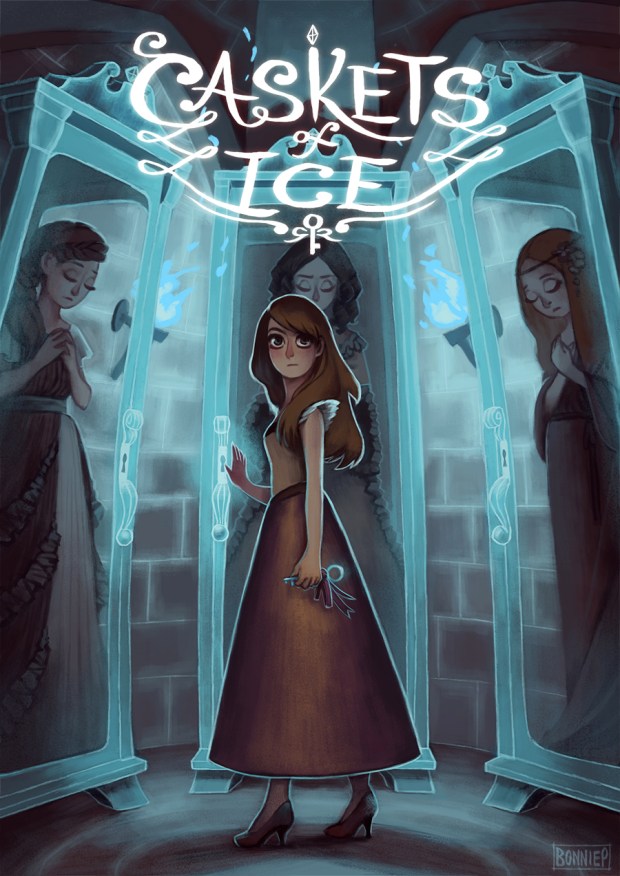
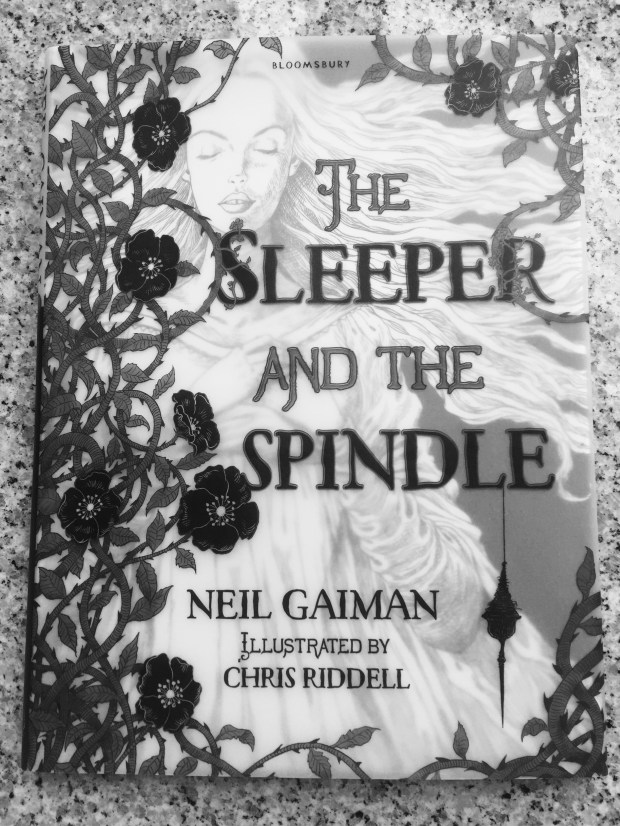
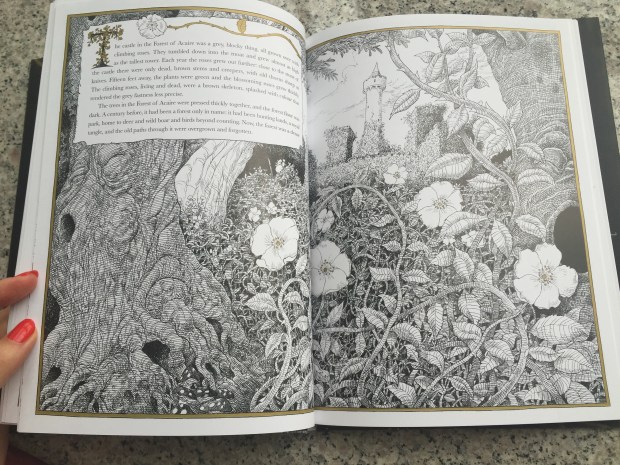
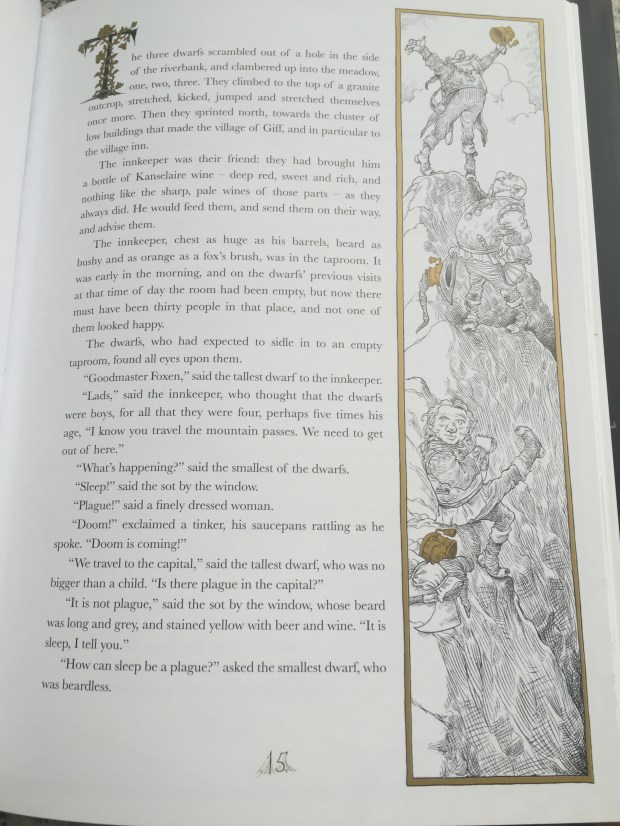
So, a while ago I posted a cover of my book ‘Caskets of Ice‘, and after much deliberation and much inspired from the wonderful designs I found in “The Sleeper & the Spindle” by Neil Gaiman (Illustrated by Chris Riddell) I have come to the conclusion…..

That I am officially looking for an illustrator for my work. It is action/adventure fantasy, with gothic dreamy aspects with plenty of queens and castles that will appeal to all lovers of fairy stories-though not 100% a fairytale. It blurs the boundaries between dreams and reality from a perspective of a girl who yearns to escape from her daily life, trapped in a world which is far scarier, creepier and sometimes, downright brutal than she ever imagines.

It celebrates the imagination, and when dreams come alive.

All ideas are welcome! Below is the existing cover, designed by the talented Bonnie:

cover final_s_title

Here are examples of some of the illustrations you may see in “The Sleeper & the Spindle”, with their wonderful black and white drawings and gold leaf.

image1

image2 (1)

image3

Please drop me a message if you are interested in collaboration, or you want to know more information about the book. Let’s begin on this magical journey together…

Kate 🙂


‘My Ántonia’~ Book Review

image1

“The red of the grass made all the great prairie the colour of wine stains, or of certain seaweeds when they are first washed up. And there was so much motion in it; the whole country seemed, somehow, to be running.”

It recalls memories of the adventures of “Tom Sawyer”, Scarlet’s love of the land in “Gone with the Wind”, romantic tendencies towards philosophy in “The Great Gatsby” and a voice quite its own. For one, I really enjoyed the descriptions of nature, the vivid colours etched into your imagination of some place new, not yet experienced. A pocket into a time past.

On the edge of the prairie, where the sun had gone down, the sky was turquoise blue, like a lake, with gold light throbbing in it….the evening star hung like a lamp suspended by silver chains — like the lamp engraved up the title-page of old Latin texts, which is always appearing in new heavens and waking new desires in men.

There’s something about reading that makes creativity flow again, and I could well carry the images of the prairies with me as I went about my day. The plot mainly focuses on Ántonia, (My Ántonia) a Bohemian girl travelling to Nebraska with her family to escape poverty and build up the land from scratch- and the memories it affords to Jim Burden, orphaned at the age of 10. Though time passes and their lives are apart, he begins to write a journal of his childhood.

Time changes us all. We adapt and view things in different ways, ways which can give us some form of calm acceptance as we grow older. It’s true that one of the main aspects you miss about a place is it’s scenery and environment. Its overflowing nature, peace and greenery, solitude. The idea of leaving our modern lives behind, escape and live in a log cabin somewhere in the wilderness seems attractive and romantic. But the reality of the hardships Ántonia and her family have to face, immigrants from her native land- their struggle for survival is real.

“The older girls, who helped to break up the wild sod, learned so much from life, from poverty, from their mothers and grandmothers; they had all, like Antonia, been early awakened and made observant by coming at a tender age from an old country to a new.”

With any piece of writing, character development is by far one of the hardest – through speech or physical descriptions that need maintenance not just in introduction. Yet Willa Cather’s transition of Ántonia from child to adult captures her resilience, good nature, pure love for others and open, childlike wonder that sustains her as the yolk that brings all avenues of the story together.

Jim Burden’s devotion to Ántonia is remarkable in a way that transcends words. She represents to him his childhood days, his home, all the people that touched his life before he went away, memories that he has always cherished and carried with him. Their lives may have taken separate turns, but their collective memory is one that will always remain.  “…my mind plunged away from me, and I suddenly found myself thinking of the places and people of my own infinitesimal past.”

I will leave you with an extract – my particular favourite:

Of course it means you’re going away from us for good”, she said with a sigh. “But that doesn’t mean I’ll lose you. Look at my papa here; he’s been dead all these years, and yet he is more real to me than almost anybody else… The older I grow,  the better I know and understand him…”

About us was growing darker and darker, and I had to look hard at her face, which I meant always to carry with me ; the closest, realest face, under all the shadow  of women’s faces, at the very bottom of my memory. “I’ll come back,” I said earnestly, through the soft, intrusive darkness.

“Perhaps you will-” I felt rather than saw her smile. “But even if you don’t, you’re here, like my father. So I won’t be lonesome.”

As I went back along over that familiar road, I could almost believe that a boy and girl ran along beside me, as our shadows used to do, laughing and whispering to each other in the grass. 

swirl-divider4

‘Villette’ Review & New Books!!


IMG_6528

Before I start reviews on these lovely editions, let me start by writing on something long overdue on my blog; ‘Villette’ by Charlotte Brontë.

Both as a human being and a teacher, there passed understanding between Lucy Snowe and I.

After a series of disasters that befall the protagonist Lucy at the start of the novel; she breaks free and starts anew to work on her own merit in a French school. There’s a complexity of feeling and contradictions, by the end you truly appreciate just how many layers the reader is drawn into …her self reliance in new surroundings, her command and discipline over unruly pupils-it involved perseverance (a chapter a night in my case) Lucy too persevered through the pages. By no means faultless, she is strong in her convictions, and a willpower that could probably cut through steel. Her high depreciation for herself means she isn’t able to understand why anyone would love her, and stays much in the shadows. It contrasts against the shining qualities of Ginevra Earnshaw and little ‘Paulina’. I can only compare that Lucy has the constancy of a rock, versus Paulina’s elegance and inner shine, and perhaps- superficial glow of Ginevra.

I wanted to meet the characters and judge for myself what they were really like. It seemed that by the end you are unable to get a clear picture of any individual, which is true because it would take a lifetime (and more!) to really study the complexities of another. Lucy too grew to fondness ~

“There are people from whom we secretly shrink, whom we would personally avoid though reason confesses they are good people, those with faults of tempers …besides whom we live content as if the air about them did us good.”

A lot of French, and I only understood the basics! Sometimes I wished there would be translations in the large segments of text, but you can somehow infer from the passage the meaning, so it wasn’t a big problem. ‘Villette‘ is mysterious, religious, touching almost on the fantastical- but all are resolved and brought back into the realms of reality- from the appearance of the ghostly nun Justine Marie and the walk through the fete at midnight, induced by a drugged opium state.

The ending too leaves it open to the reader to decide- for Lucy her life has been much of disappointment and observation, she never believed anything good would come to her and yet she has experienced more emotions, more heartache and reasons to be grateful than any of the other characters. Through loss, she has gained something else. A deeper understanding and acceptance, a depth of love quite inspirational.

“I used to think what a delight it would be for one who loved him better than he loved himself, to gather and store up those handfuls of gold dust, so recklessly thrown up to heaven’s reckless winds.”

There is something about the Brontë sisters.

In Emily’s ‘Wuthering Heights’, in Anne’s ‘The Tenant of Wildfell Hall’, of Charlotte’s own ‘Jane Eyre’. What do they have in common? Though this novel touches upon Lucy’s complicated relationships and luckless romances, perhaps you can argue that they understand what it is to feel loss, to show inner strength through determination of spirit and passion; you can feel this no doubt from their novels. They makes you uncomfortable, it is unsettling. Nobody can ever confuse ‘Wuthering Heights‘ with a light or easy read. There is no promise of a happy ending. It is about accepting this is what life is, never predictable, never carefree, and definitely not safe from loss on any accounts.

Unless you are an avid literature fan, this may not be the one that opens the avenue of your hidden passion for reading classics. But, I would say it’s worth it if, like me, your passion already is to read as many and as much of them as you can get your hands on.

swirl-divider4


A dedication

woodland watercolour

swirl-divider4

The cottage has opened its doors to me,

of dreams long foretold,

of poppies and tiger lilies, violets three,

and memories dear to hold

*

The path is worn through tender days,

the seeds blossomed; overgrown,

through woods and bluebells I long to stay,

o’er moss fair winds have blown

*

She halts my quiet sighs,

bent down with grains of sorrow,

and beckons me forth on green fields lie,

Where none but Death can follow

*

Storms rage on in faraway lands

but close stillness and quiet roam

It comforts the voices of my consumed heart;

and tenderly guides me Home.

swirl-divider4

Copyright © 2015 by Kate W J White (All Rights Reserved)