“Barnaby Rudge”: A tale of violence

swirl-divider4Dicken’s review number 2, comes “Barnaby Rudge“. It is not as famous as his other novels, and quite understated. To give you an idea of what it’s about if you haven’t read it, firstly, here is a SUMMARY:

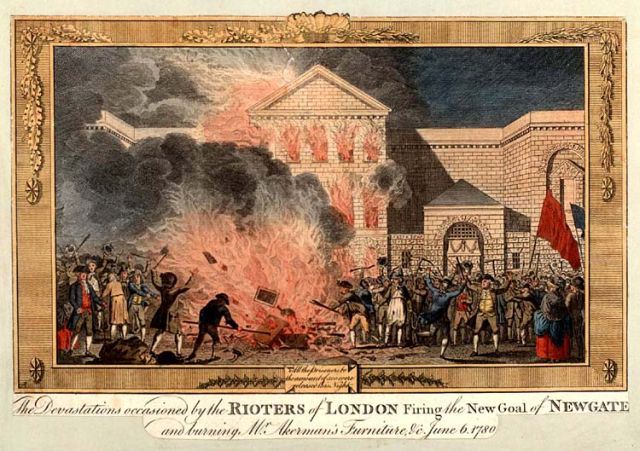
“Dicken’s first historical novel is filled with violence, looting and the terrible deaths of the anti-Catholic Gordon Riots that swept London in 1780. ‘Barnaby Rudge’ tells the story of Barnaby, a simple boy caught up in the riots, and the friends and family who are themselves affected by the strange events in Barnaby’s life, including kind- hearted locksmith Gabriel Varden, dim-witted and egotistic landlord John Willet and the brilliantly villainous Sir John Chester. This is an unforgettable novel of conspiracy, blackmail, abduction and Gothic melodrama.”

gordon-riots-newgate-prisonHere are some bite sized facts:

1. This is the 5th book Dickens wrote, after “The Old Curiosity Shop”. 

2. Like the rest of his works, it explores the inequality between social class. Ordinary citizens are seen to rise up and loot, steal, burn down houses and prisons; a total anarchy where they themselves perished- the poor, vagrants who have nothing to lose. (Those who are forerunners of the riots seem not to have a purpose for following the cause, in the case of Hugh and the hangman Dennis)

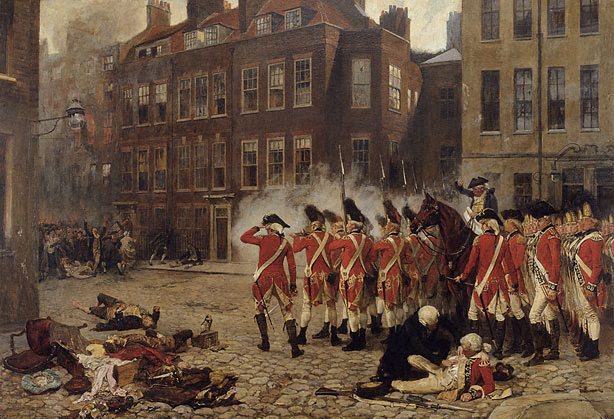
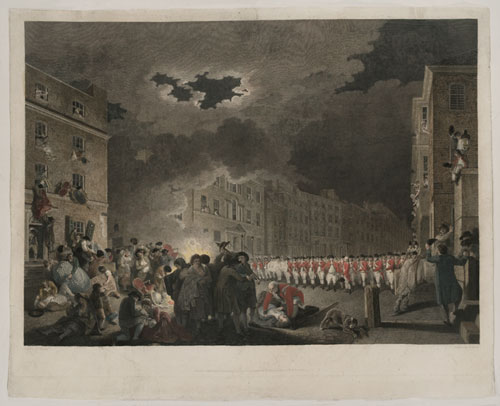
The_Gordon_Riots_by_John_Seymour_Lucas

“The Gordon Riots” by John Seymour Lucas

4. It is comparable to his later novel “A Tale of Two Cities” detailing the tumultuous period of the French Revolution and the danger of a disruptive society and mob behaviour.

5. You feel for Barnaby, a simple boy who takes comfort, joy and happiness in his surroundings. His loyalty and kind heartedness makes him a target. He follows his ‘assumed’ friend and does all he is bidden without question, hoping it will bring his mother and himself into the path of riches, and ultimately, a better life for them both. The story of Barnaby is very touching, and emphasises on how innocence can be corrupted by those with their own agenda.

10416

The rise and revolt of the people


6. Though”Barnaby Rudge” took me longer to read than “Our Mutual Friend” (and this can be due to other contributory factors)- I enjoyed it a lot.The beginning was quite captivating and portrays a ‘different’Dickens, a step away from the frivolity, and often comical vanity of the upper class. It creates a comparison between the peaceful, pastoral life versus that of the bloodshed in the streets of the city, sparked by the 1780 anti-catholic uprising. This was led by Lord George Gordon, leader of the Protestant Association of London. The riots were a wave that swept over London- the power of persuasion and word of mouth, growing out of proportion to make law abiding citizens rise up and revolt. The novel depicts violence fuelled by poverty and the influence of those in position who abuse their power.

7. Yet aside from all the violence and turmoil of the riots,this is a Dickens book like all the others,and his characters are no less developed. You come across characters like Sir John Chester who you really hate and whom you hope gets dealt the justice he deserves (but of course, this is a Dickens so ultimately, good always triumphs over evil) and relationships that always undergo a long, painful trial before the ‘light of happiness’ is finally revealed.

All in all, “Barnaby Rudge” is another satisfying Dicken’s novel, and the 5th one… that I have binge read over the summer!

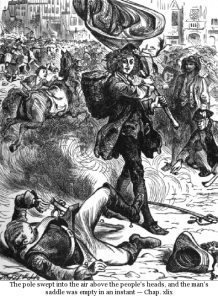
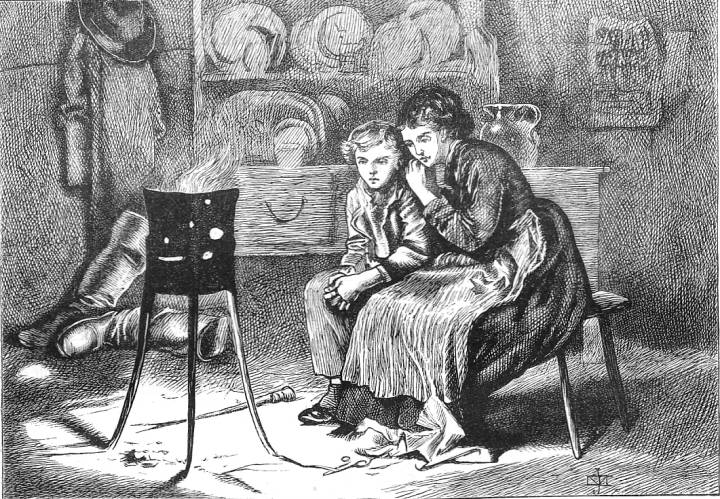
barnaby-rudge-by-fred-barnard-1

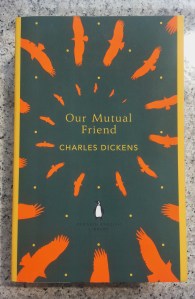
“Our Mutual Friend” Dickens


Finally, I have found time for a Dickens Review! I put these in small bite 20140804_144457sized chunks, for easy viewing…so here begins;

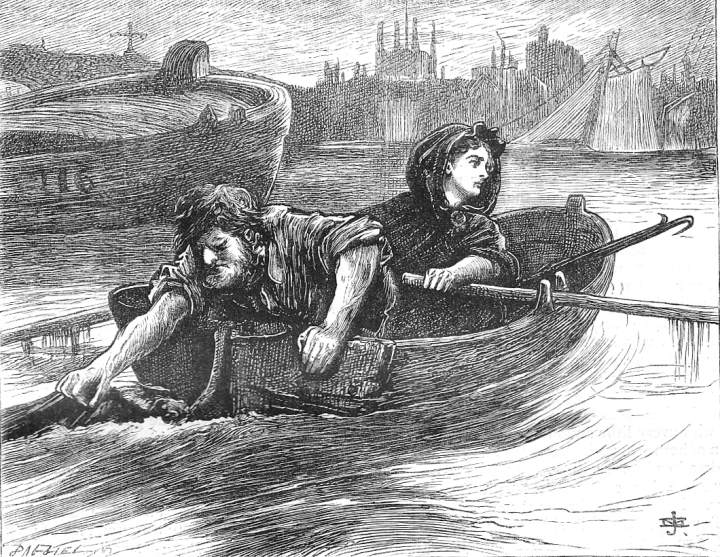
  • Summary as taken from the blurb of Our Mutual Friend: “Dicken’s last completed novel and one of the greatest books about London, ‘Our Mutual Friend‘ is a dark, enigmatic portrayal of a city corrupted by money.When a body is pulled out of the Thames, it is presumed to be John Harmon, drowned under suspicious circumstances before he could claim the fortune his father made from rubbish heaps. This mystery impinges on the lives of the naiive, hardworking Boffins, the riverside scavenger Gaffer Hexam, his beautiful daughter Lizzie, the mercenary Bella Wilfer and the doll’s dressmaker Jenny Wren, in a story of greed, death and renewal.”16

1. A dark story, it is considered one of Dicken’s most “sophisticated works”, though perhaps, one of his least well known.

2. The novel has a vast array of memorable characters which, through his wit and humour; you soon grow attached to.Though the language is less straight forward compared to his earlier novels, don’t be put off. The narrative is very well thought out and incredibly complex with intricate and unexpected plot lines. Compare the layers to an onion…

3. Death, intrigue, mystery, romance – it has everything. You are fooled along with a great number of characters along the twists and turns of a very complex narrative.Very satisfying as characters get their just rewards and no evil deed goes unnoticed, or unpunished. For me, the reading experience has to hold a variety of things, just like my favourite films. Action adventure mixed with fantasy and a bit of romance. It’s great how though Dickens manages to portray the worst of human nature in squalid London and the boundaries of social class- there is a particularly heart warming scene between John Rokesmith and Bella Wilfer that I always find myself going back to and just melts my heart (yup, I’ve bookmarked the pages)

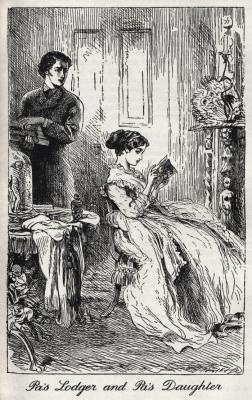
OMF-Lodger-and-Daughter4.Like each of his books, there are some great characters- no matter what shape or form they take, from the devilish and hideous dwarf Quilp in “The Old Curiosity Shop” who delights in playing tricks on others and getting the better of them, to the one legged and villainous Silas Wegg who circulates the pages of “Our Mutual Friend.”

5.However one thing about Dickens most people notice, is that his female characters are often under developed. They either hold supporting roles, as spinsters, the frugal or the vain and frivolous, or proud mothers. Young females are all dignified, elegant, pretty who undergo some tragedy or suffering which make them all the more beautiful and heroic; sought after and admired by men of all ages.

6. The illustrations are wonderfully detailed. They really bring the characters to life and gives that something bit extra to your reading experience.

177.The novel exemplifies on the corruption money can bring, the greed it excites, and how it effects the lives of those it touches.

8.After finishing the book, I thought up a hierarchy of wealth of all of the characters in the novel, taking into consideration their fluctuating social position. This may seem a bit time consuming and superfluous, but the story made me think long after I had closed its pages,(often as I was lying awake at night) and it was my way of sorting through the vast array of characters in the novel. I don’t want to give away spoilers by laying it out in all its glory. So I will let you read it first…

(Follow for more bite sized reviews on “Barnaby Rudge”, “Nicholas Nickleby” and other Charles Dickens novels.) 

Light

Dancing figures aglow

shimmering in burning starlight

wax dripping

ash like pollen, drifting

paint flecks sewing the night sky

lifting a heart’s wish.

swirl-divider4

Copyright © 2014 by Kate W J White (All Rights Reserved)

vladstudio_sky_lanterns_800x600

Scent

Shiny, bulbous like an alien capsule

with a breathing tube stabbed in liquid

drowning stem of the future

orchard floral scents splitting their leaves

in their undulating waves

crunchy skin splitting beneath your lips

-dripping into a marble.

swirl-divider4

Copyright © 2014 by Kate W J White (All Rights Reserved)

The Nine Day Queen

lady jane grey

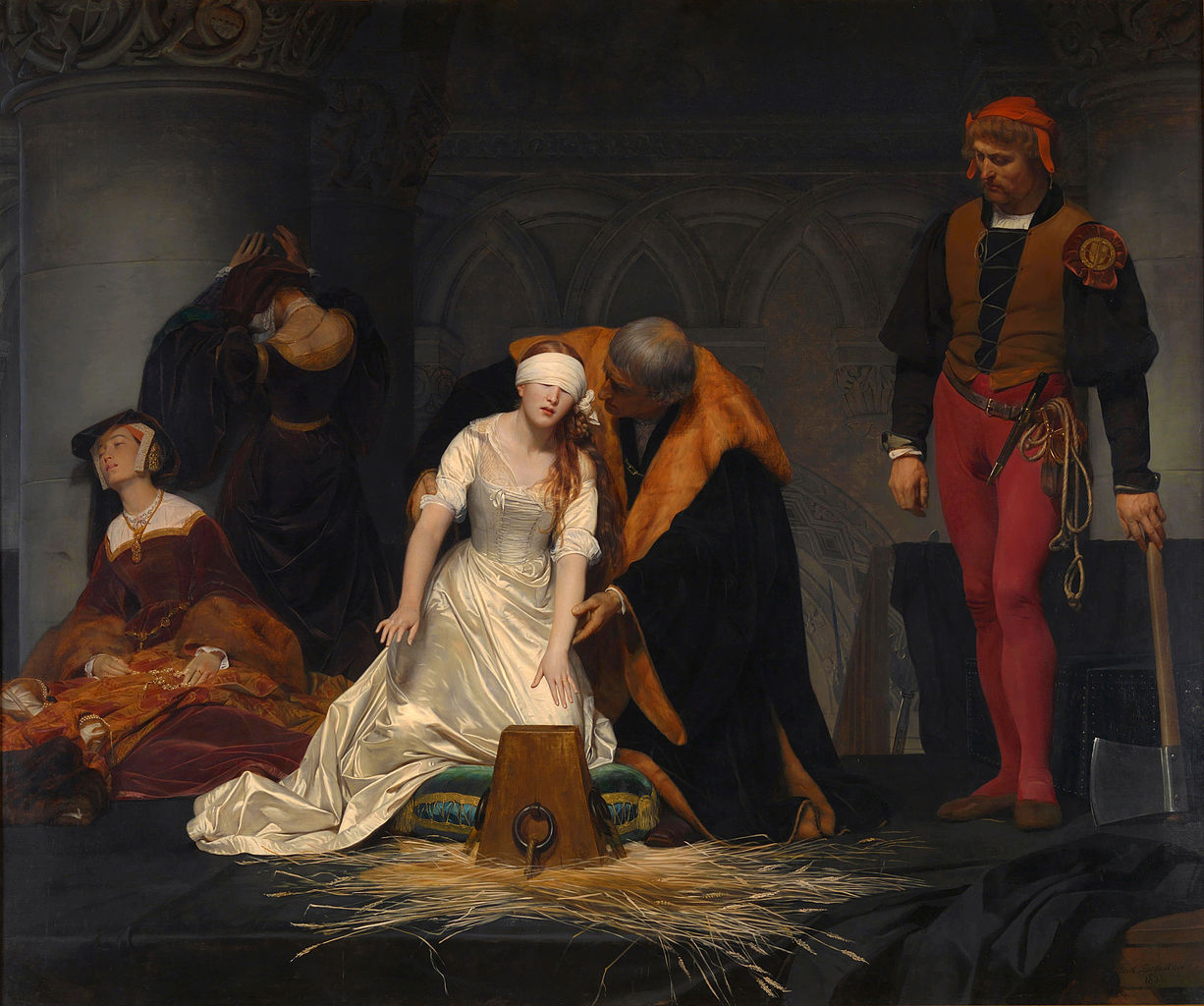
“The Execution of Lady Jane Grey” by Paul Delaroche completed in 1833.

A Story

There’s something about it. Something…..The way her arm reaches for the chopping block, the way her dress gathers, cream satin-

This is her last moment. The priest, the executioner, her ladies in waiting but it is not their death we have come to see.

*

This beard and a brown tweed jacket thinking ‘she’s so young’, ‘how beautiful the crook of her arm’, doesn’t see the people trying to wedge themselves to his left and right because they’re all looking up into her pure little face like she’s the Virgin Mary. She has the attention of the whole court with the reach of her arm and poor Lady Jane Grey doesn’t even know because she’s blindfolded.

 
This trench coat and fur trim thinking about the executioner’s tight leggings. Eyes narrow and move from left to right, left to right, wondering why the girl in the picture is wearing a night shift and why the leggings leave nothing to the imagination. ‘If they didn’t want to ruin her lovely clothes’ she’s thinking, ‘they could have chosen a better colour than white.’ It’s cream not white. This is a big difference for someone with an eye for detail, a connoisseur of Art, but fur lady has already moved away.

 
The coffee cup Identicals thinking ‘Lady Jane is our cupid’. Looking at the girl in the painting as they bring their faces closer together, to kiss, to pull apart and look at her again, as if she would bless their union. Thinking, ‘the poor girl she will never get to experience what we have, this happiness.’ The Identicals cannot walk from the staggered weight of each other. They are blind, like Lady Jane is blind, when a painting isn’t even a painting to the couple but a canvas supported by a frame.
Mr Tie not straight, back to the portrait of the Comtesse Vilain XIIII and her Daughter. Fingers move over imaginary rosary beads, counting the structural arches of the building. Checking the phone, waiting for a business contact or client? Art related or leisure?

 
“What’s Monarchy mean? Oh….we learnt about Henry VIII but not, not Lady Jay Grey.” Says a voice then another- “Jane, she was called Lady Jane Toby.” “Mummy, what time does the Science Museum close? Because you promised.” “I told you in the car, Grandmother wants to see the paintings first…” “I know, but, but…”
Chances are they will leave within the hour.

The Science Museum. Now that was an idea. The awkward-weird-self conscious you feel going on your own, using the touch monitor sensory games with no-one to laugh with, getting lost on the top floor with no lift to take you down, you can say ‘what’s wrong with going yourself, you’re at a gallery on your own aren’t you?’ and the red dress on the bench- me, telling herself to stop being a smart arse.

“Does it even matter she was beheaded in private?” “It was a show of respect from Mary”, “So what, she was going to die anyway.” “Still…” “There is no still. Mary showed her respect by killing her sixteen year old cousin? It’s a bit late for that.” “I wonder if they saw the irony.” “What irony?” “It’s all jealousy and treachery. They are willing to kill their own family for a higher position and to be one step closer to the throne. They sacrifice their life for it. They’re brought up as kids to love the crown, to be loyal to it, to die for it. A war starts, one side loses but they go off to lick their wounds and years later they’ve got together an army, they come back stronger than ever to reclaim what has been lost. But it’s also because of family, to give your heir a better chance to succeed the throne. That’s why they fight in the first place.”

Teenagers thinking about current day politics. Teenagers hating politics, thinking, ‘there’s no telling what will happen.’

For a gallery there’s a lot of talking.

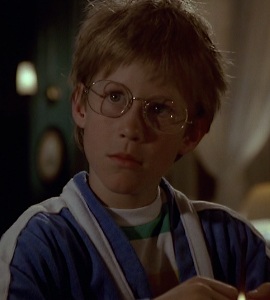
There’s another beheading in the room. It’s not the focus like Lady Jane Grey is, and the way rucksack girl looks at it and looks away instantly, is one to avoid. Red dress will tell you. It’s of the execution of Saint John the Baptist. The executioner is in the act of taking his head off with a sword. John the Baptist is kneeling on the ground holding a cross. Kid with the glasses is looking at it with interest thinking about the soon to be headless John the Baptist and the blood going everywhere and the screams of the woman in the painting, don’t forget the screams. Kid with the glasses doesn’t want to know what John the Baptist did wrong or why Herod wanted his head on a plate. The others in the gallery don’t want to know either, because they’re still looking at Lady Jane Grey.

Red dress, the last to leave the gallery, waits until the shuffle of feet find their way out into the night before looking up at the painting of Lady Jane Grey’s execution.
Finally alone with her.

The security guard is calling, “See you tomorrow. You better get on home sunshine.” He knows of her meeting with the board of directors and a delivery to supervise, so he’s trying to be sympathetic. Red dress thinking, ‘so what are your thoughts on the painting?’ but doesn’t ask. Turning off the light, locking the doors and with a smile, handing him the key she has been holding all day.

swirl-divider4Copyright © 2014 by Kate W J White (All Rights Reserved)

~ City Streets ~

city_day_and_night

Stumbling on broken petals of tarmac
The fine contours of my cheeks crack the mould
It washes the dirt from the earth
Its polluted breath
Vomits its secrecy in whiskers of black.

swirl-divider4

Copyright © 2014 by Kate W J White (All Rights Reserved)

Bookilm Day 2: Childhood Fear of Witches?

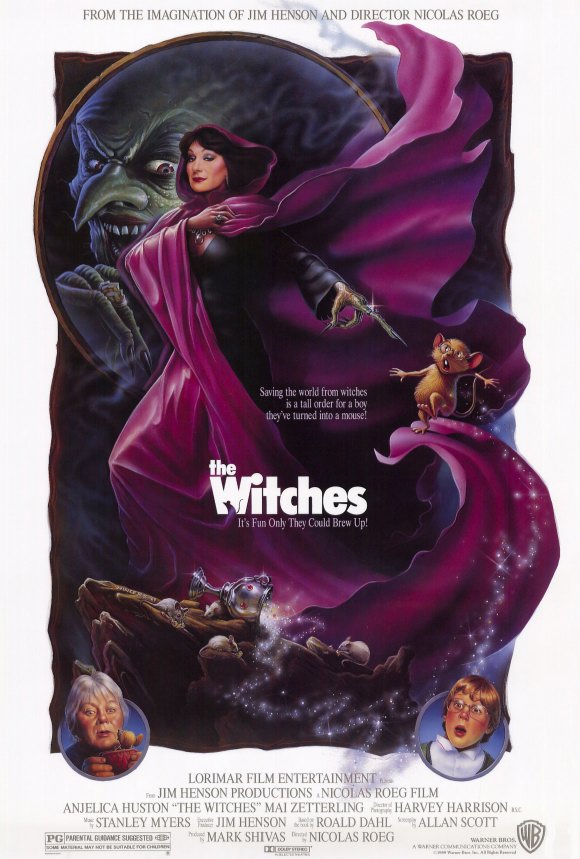
600full-the-witches-posterLuke is a character you easily identify with as a kid, he’s loyal, adventurous, knows the difference between right and wrong, somewhat geeky with a wide eyed innocence.  Even if you can’t relate to him, you can understand him as Roald Dahl’s male protagonist.

luke

Luke in “The Witches” (1990)

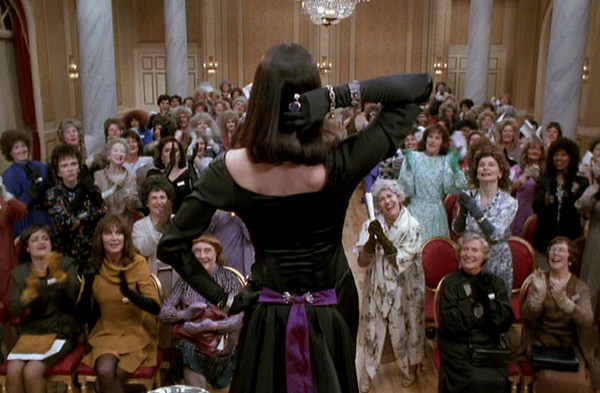
So what happens in the film? Luke, after the death of his parents moves from Norway to England with his grandmother, who often tells him stories of witches. They go on a trip to Cornwall, with his two pet mice, but things start to take a strange turn. Chasing his escaped mice, William and Mary, he happens to be in a RSPCC board meeting- a room filled with women, but as he soon finds out, witches. They take off their wigs, their gloves, their shoes. He witnesses them turn a small boy into a mouse. He makes an escape, but unfortunately is captured and shares the same fate as his friend. But no, it does not stop there, and being a children’s film, the brave Luke must find a way to destroy all the witches, in the body of a small furry talking mouse.

The term ‘witch’ has all sorts of connotations, they are portrayed as old, crooked with gnarled noses, warts, hump backed and altogether really ugly. The witches in Roald Dahl’s books aren’t that different- they are bald, have square feet and no toes, blue spit, and purple eyes.
They’re not supposed to be nice. They are there to scare children senseless.


tumblr_m9wdcfsSh61qznur9o1_400

Grand High Witch- Quentin Blake illustration

The book allows you to use your imagination in its full fledged form, but you can argue whether this fear factor is reduced, translated onto the big screen. Personally I don’t feel this to be true. You have to take into account this is a 1990’s film, using props with no CGI. As a kid, there’s something grossly realistic about seeing a woman peel her face off in front of the audience, showing square feet and purple eyes and gnarled and crooked fingers in all their glory.

For the longest time I believed my dad when he said witches were real and I had this fear and also constant anticipation of catching one in the act of smuggling away a child, or hunting them down, just like Luke does-I was captivated by witches, and wished to be a good witch with magical powers. Much like “Matilda” and her ability to move things with her mind, the stuff of children’s dreams.

So here are some points to consider.

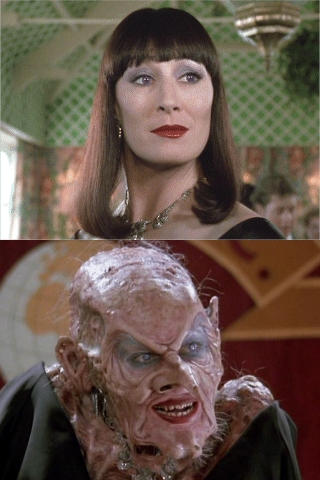
a) The Grand High Witch- the worst of all the witches, is seen to have a pretty mask which covers her true form so as better to fool people with. Moral: Witches are always in disguise, just because they are attractive doesn’t make them more trustworthy. And let’s not forget when the Grand High Witch takes off her mask- it is the stuff of nightmares.
8445-21462

Angelica Huston as The Grand High Witch

b) Luke is advised not to shower too often by his grandmother, in case the witches sniff him out, and clean children smell just like fresh dogs droppings- so keep a look out for women in the streets who are holding their nose when they pass you!

c) Witches are all women (though, if you look closely in the film, some of them are male, probably due to lack of members to cast)
thewitches21

RSPCC board meeting (“The Witches” 1990)

d) They plan on setting up sweet shops all around England in order to poison children and turn them into mice so they can be squelched.

e) They commit vile and despicable acts of cruelty and show no remorse.

So what does this teach young, impressionable young kids?

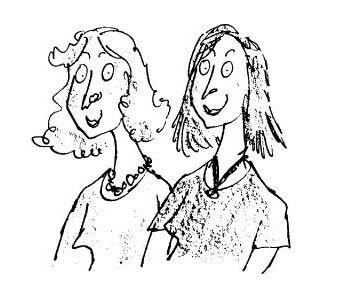
“She might even be your lovely school-teacher who is reading these words to you at this very moment. Look carefully at that teacher. Perhaps she is smiling at the absurdity of such a suggestion. Don’t let that put you off. It could be part of cleverness….”
dahl_which-one-is-the-witch

Roald Dahl illustrations- which one is the witch

That they go around suspecting everyone is a witch- at least until the effects of the story wear off.
But it does draw attention to trusting strangers and accepting things from them. One memorable part is when Luke is playing in his tree-house, and a witch appears below and tries to entice him down with a bar of chocolate. Now, if Luke had not been wise enough, (and if the woman didn’t have purple eyes), well, we all know what might have happened.

erica

Erica “The Witches”

Perhaps another memorable in the story is of a little Norwegian girl named Erica, who after being kidnapped by a witch, appears in her father’s painting. However, not only does she often change position in the painting, feeding the ducks, or standing in the farmyard; but she also grows older. The years go by, until one day- being an old woman, she disappears from the painting altogether.


Erica vanishes into the Painting

Creepy huh?

We assume she has been killed by a witch, but her ‘presence’ in the painting makes it all so eerie and gives you goosebumps. Is it really her in the painting? Her ghostly echo is heard calling ‘Papa’ several times. Who would cause such torment?
All these thoughts spiral in a child’s mind. And the answer to that is witches. They are demonic and punish children for no reason at all.

But don’t worry, because as there are bad witches, there are also good witches that counteract their evil. Phew!

Just as well they aren’t real, right?

swirl-divider4
Here are some good extracts from Roald Dahl, which can be good discussion points for students in class. What do they teach children? And does this apply to real life?
“If a person has ugly thoughts, it begins to show on the face. And when that person has ugly thoughts every day, every week, every year, the face gets uglier and uglier until you can hardly bear to look at it.
A person who has good thoughts cannot ever be ugly. You can have a wonky nose and a crooked mouth and a double chin and stick-out teeth, but if you have good thoughts it will shine out of your face like sunbeams and you will always look lovely.”- The Twits

“And above all, watch with glittering eyes the whole world around you because the greatest secrets are always hidden in the most unlikely places. Those who don’t believe in magic will never find it.”– Roald Dahl

“I have a passion for teaching kids to become readers, to become comfortable with a book, not daunted. Books shouldn’t be daunting, they should be funny, exciting and wonderful; and learning to be a reader gives a terrific advantage.”– Roald Dahl

“It doesn’t matter who you are or what you look like, so long as somebody loves you.”– The Witches

Modern Fairytale

do_you_believe_in_fairy_tales___by_ammozart-d5gxlce

-Welcome to my library says the beast. Two storeys to be read at your leisure. All yours.

-No thanks. Belle shows him her Kindle, held to her chest like an over swaddled baby-binder. This is your whole library.

-Can you eat it? Smell it, touch it, lick it? Didn’t think so, says the beast. It is not a proper thing you can drop in a bath, crumple in your bag until it is dog-eared, use as a coaster -no, it’s a travesty. You cannot eat a Kindle, and that’s a fact.

Copyright © 2014 by Kate W J White (All Rights Reserved)

~ The Fire Trees ~


Amazing_Mountain_Scenery_freecomputerdesktopwallpaper_1920

There is a dam in the distance, with wide walls
Purple leaves that bob in the valley
The mountains with the shadows that burn
And the snow that meanders disease
I ride with my horse the patches of moon
Upon hills stitched with copper
Orchards with their torso’s aflame
Hang their heads in silence, as the hush falls
The sky falls and they are vanquished once again
Stripped bare of wisdom, of courage and worth
Beyond the chaos is the door
The door with an eager eye that opens
With figures that trail blood and gold.

by Kate

Copyright © 2014 by Kate W J White (All Rights Reserved)

The Narrative Voice of Death: “The Book Thief” by Markus Zusak

liesel-libraryThe narrative voice, as one who unravels a story to the reader; is interesting to explore as it bring a unique perspective to the novel. In this case, the narrative voice of Death acts as a director of the lives he witnesses, a storyteller masking the misery during the Holocaust and the suffering of the Jews during WW2 through the simplicity of storytelling. “The Book Thief” takes the form of a Meta-fictional style, the act of writing becomes the subject; of which the character of Death capitalises on the “truth” blending fiction and reality through irony and self reflection. In the text, the narrator reflects on the capability of humanity and mankind’s ability to be simultaneously beautiful and destructive; characteristics which often puzzle and surprise Death. 

Death is an omnipresent and omniscient force whose job is to collect souls; it is humanised and displays a vulnerability and sentimentality of spirit. The question is put forth to the reader; what if Death can possess the ability to feel and care for the lives of those it witnesses?  As the narrator itself claims, “the human heart is a line, whereas my own is a circle, and I have the endless ability to be in the right place at the right time. The consequence of this is that I am always finding humans at their best and worst.  I see their ugly and beauty and wonder how the same thing can be both.”(p.491) It is through the narrative voice which brings our attention to the nature of mankind and teaches us to observe what we as humans are capable of; and the possible consequences of our choices in life.

f992718582e6ba92d30f06f6a156840cIt points out it is often misconstrued as a stereotypical being, a Grim Reaper figure with a cloak and scythe. Cynically, it continues, “You want to know what I truly look like? I’ll help you out. Find yourself a mirror while I continue.” (p.307) Though this is metaphorical, it brings to the reader’s attention how Death is within all of us, our fears, hopes. The concept is all around and part of us, it is something we should not be afraid of. So what shapes our view of Death? Is it shaped by what we see in the media, as shown by the vision of the Grim Reaper, or by our experiences? From an early age, our first experience of Death is perhaps through the loss of a pet. If a pet dies, parents struggle with how best to share this information in a way which will not horrify or scar the child, as it is something which will remain in their experiences for years to come. For us all, death is equated with sadness and pain so it is no surprise we are scared of it. “Those kinds of souls always do – the best ones. The ones who rise up and say “I know who you are and I am ready.” (p.532) The narrator, though direct and frank in its choice of words; illustrates to the reader the familiarity it has with humans, like meeting a close friend. There is a comfort in that, it is familiar with its occupation and therefore imparts to the reader the lessons and inevitability of life to soften the transition.  

The Book Thief

“The Book Thief” (2013) Liesel and Rudy race each other

Death often refers to Liesel as the “Book Thief” in the novel. The title of the novel is dedicated to her. So what is the significance? The reason for this is her love for stealing books. In the case of Liesel, not only is stealing a representation of a girl’s defiance against adversary and the influence of the Nazi regime but she is taking her education into her own hands.

So is it acceptable to steal something if it is abandoned, or left to burn? As children we are taught to treat books with respect, to assign value to words. Nowadays we live in a society which relies predominantly on technology. In the West, there is still a focus on reading for pleasure, yet less and less children have the motivation or desire to read storybooks, especially ones that do not contribute to schooling. So how do we encourage kids to read and share their love of reading with others? Like Liesel it can be a very special and personal experience. For her, it is the thrill of stealing something back- everyone has their own motivation, the conscious act of choosing their first book and their sense of achievement when they finish it. Through a Russian Doll effect, of a story within a story, the narrator Death has a unique ability to reignite the passion to read, the act of picking up a book and feeling its spine, the letters on the cover. Each book is different, just like each individual in the world. Perhaps it is this love and treasuring of words that makes Liesel’s actions more acceptable to the reader; after all, Death does not judge Liesel for her acts of stealing but regards her determination with pleasant surprise.

Liesel in the neighbour’s library

A history lesson

Death can be considered a very unlikely narrator giving a history lesson to children in the text. Comparable to the autobiography “Anne Frank: The Diary of a Young Girl” from a Jewish girl’s perspective, “The Book Thief” focuses on a German girl’s point of view. Though this is a novel, many children today live similar lives to Liesel; orphans, homeless, starving in the backdrop of war. Death serves as the omnipresent and omniscient voice that as a reader, we do not doubt, focusing on children and how war impacts on them. The world is watching events unfold in the past, yet do we learn from our mistakes? Is history repeating itself? The narrator wishes to highlight on this important point, encouraging the reader to think and, as mentioned above to form their own opinions on what is right and wrong. In fact, the narrator believes: Living a good or bad life is its own reward or punishment.

book-thief-6

“The Book Thief” (2013) Liesel & Hans

Language to convey meaning

Another point to discuss in relation to Death’s narrative voice is the understanding of the structure of language to convey meaning, “the words were on their way and when they arrived, Liesel would hold them in her hands like the clouds and she would wring them out; like the rain. (p. 85)” It is the unexpectedness of language and the unique way Death offers information. It explores everyday and common aspects such as rain and clouds but describes it in a way which seems unique and different to the reader; as if they are seeing it for the first time.

Book_Thief21

“The Book Thief” (2013) The Hubermanns’ at home

The narrative voice of Death is a teacher, a guide and storyteller. Death transcends time and place, encouraging us to think about topics in a way we are unaccustomed to, allowing the reader to learn about themselves through the narrative. It is a process with no definitive outcome. It is the punishment and reward of living, a story of hope and the beauty of mankind despite humans ability to perform such horrors and destruction.Essentially the novel is a universal book because it appeals to our human psyche, our compassion and our sense of right and wrong; of injustice. No matter our background, our situation in life or where we come from, there is undeniably something for everyone in the novel. May it be the love of books, of music, of singing or reading and drawing. Of friendship and family and laughter, the narrative voice of Death cements all together through its brilliant storytelling.

The-Book-Thief-cover


Exciting news! My new eerie short story collection ‘Tales from the Manor’ is available on Amazon! Check out my tabs above to get more info, free artwork, excerpts and more! ❤ Link below. Thank you friends.

https://www.amazon.co.uk/dp/B0DM43R7FT


Tales from the Manor’ tropes
Hardcover edition – matt texture
Full cover design & back cover

Copyright © 2014 by Kate W J White (All Rights Reserved)