Finally, I have found time for a Dickens Review! I put these in small bite 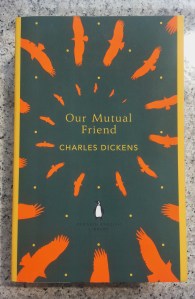 sized chunks, for easy viewing…so here begins;
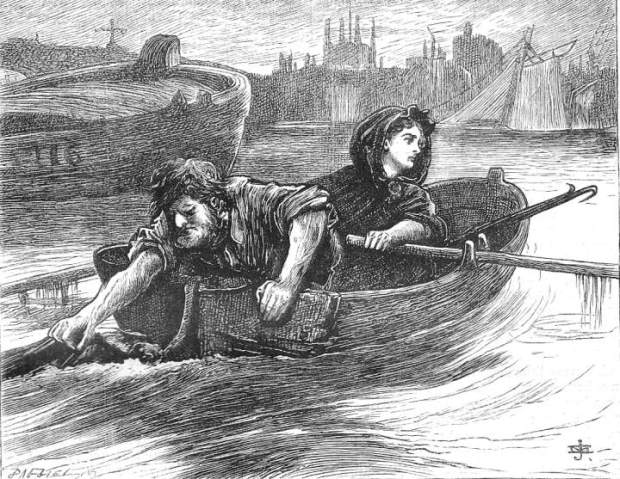
- Summary as taken from the blurb of Our Mutual Friend: “Dicken’s last completed novel and one of the greatest books about London, ‘Our Mutual Friend‘ is a dark, enigmatic portrayal of a city corrupted by money.When a body is pulled out of the Thames, it is presumed to be John Harmon, drowned under suspicious circumstances before he could claim the fortune his father made from rubbish heaps. This mystery impinges on the lives of the naiive, hardworking Boffins, the riverside scavenger Gaffer Hexam, his beautiful daughter Lizzie, the mercenary Bella Wilfer and the doll’s dressmaker Jenny Wren, in a story of greed, death and renewal.”
1. A dark story, it is considered one of Dicken’s most “sophisticated works”, though perhaps, one of his least well known.
2. The novel has a vast array of memorable characters which, through his wit and humour; you soon grow attached to.Though the language is less straight forward compared to his earlier novels, don’t be put off. The narrative is very well thought out and incredibly complex with intricate and unexpected plot lines. Compare the layers to an onion…
3. Death, intrigue, mystery, romance – it has everything. You are fooled along with a great number of characters along the twists and turns of a very complex narrative.Very satisfying as characters get their just rewards and no evil deed goes unnoticed, or unpunished. For me, the reading experience has to hold a variety of things, just like my favourite films. Action adventure mixed with fantasy and a bit of romance. It’s great how though Dickens manages to portray the worst of human nature in squalid London and the boundaries of social class- there is a particularly heart warming scene between John Rokesmith and Bella Wilfer that I always find myself going back to and just melts my heart (yup, I’ve bookmarked the pages)
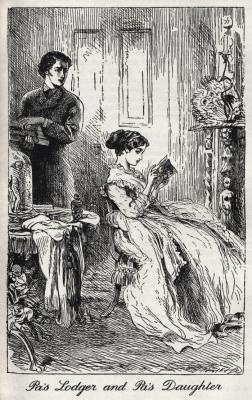 4.Like each of his books, there are some great characters- no matter what shape or form they take, from the devilish and hideous dwarf Quilp in “The Old Curiosity Shop” who delights in playing tricks on others and getting the better of them, to the one legged and villainous Silas Wegg who circulates the pages of “Our Mutual Friend.”
5.However one thing about Dickens most people notice, is that his female characters are often under developed. They either hold supporting roles, as spinsters, the frugal or the vain and frivolous, or proud mothers. Young females are all dignified, elegant, pretty who undergo some tragedy or suffering which make them all the more beautiful and heroic; sought after and admired by men of all ages.
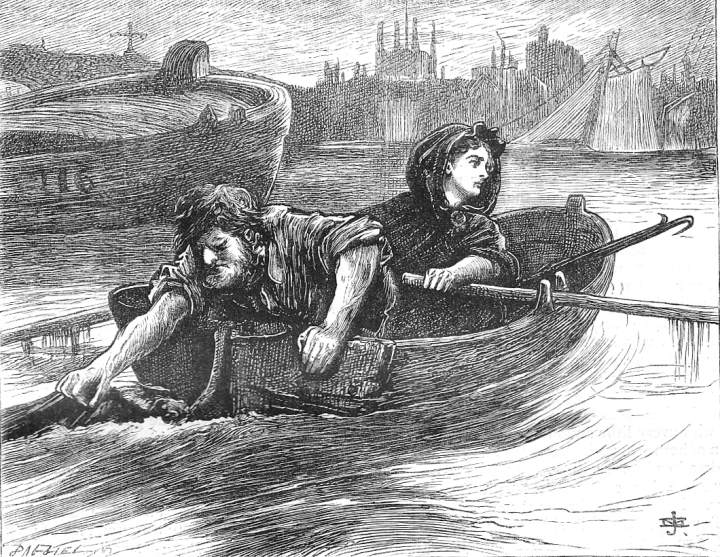
6. The illustrations are wonderfully detailed. They really bring the characters to life and gives that something bit extra to your reading experience.
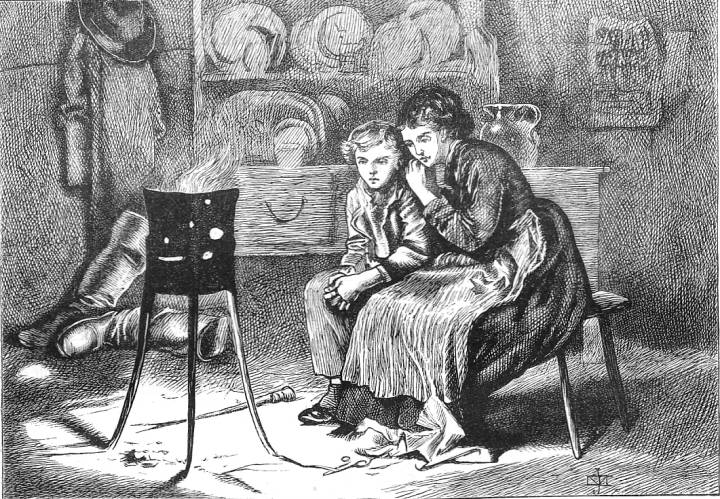 7.The novel exemplifies on the corruption money can bring, the greed it excites, and how it effects the lives of those it touches.
8.After finishing the book, I thought up a hierarchy of wealth of all of the characters in the novel, taking into consideration their fluctuating social position. This may seem a bit time consuming and superfluous, but the story made me think long after I had closed its pages,(often as I was lying awake at night) and it was my way of sorting through the vast array of characters in the novel. I don’t want to give away spoilers by laying it out in all its glory. So I will let you read it first…
(Follow for more bite sized reviews on “Barnaby Rudge”, “Nicholas Nickleby” and other Charles Dickens novels.)


 katewjwhite.com

