‘My Ántonia’~ Book Review

image1

“The red of the grass made all the great prairie the colour of wine stains, or of certain seaweeds when they are first washed up. And there was so much motion in it; the whole country seemed, somehow, to be running.”

It recalls memories of the adventures of “Tom Sawyer”, Scarlet’s love of the land in “Gone with the Wind”, romantic tendencies towards philosophy in “The Great Gatsby” and a voice quite its own. For one, I really enjoyed the descriptions of nature, the vivid colours etched into your imagination of some place new, not yet experienced. A pocket into a time past.

On the edge of the prairie, where the sun had gone down, the sky was turquoise blue, like a lake, with gold light throbbing in it….the evening star hung like a lamp suspended by silver chains — like the lamp engraved up the title-page of old Latin texts, which is always appearing in new heavens and waking new desires in men.

There’s something about reading that makes creativity flow again, and I could well carry the images of the prairies with me as I went about my day. The plot mainly focuses on Ántonia, (My Ántonia) a Bohemian girl travelling to Nebraska with her family to escape poverty and build up the land from scratch- and the memories it affords to Jim Burden, orphaned at the age of 10. Though time passes and their lives are apart, he begins to write a journal of his childhood.

Time changes us all. We adapt and view things in different ways, ways which can give us some form of calm acceptance as we grow older. It’s true that one of the main aspects you miss about a place is it’s scenery and environment. Its overflowing nature, peace and greenery, solitude. The idea of leaving our modern lives behind, escape and live in a log cabin somewhere in the wilderness seems attractive and romantic. But the reality of the hardships Ántonia and her family have to face, immigrants from her native land- their struggle for survival is real.

“The older girls, who helped to break up the wild sod, learned so much from life, from poverty, from their mothers and grandmothers; they had all, like Antonia, been early awakened and made observant by coming at a tender age from an old country to a new.”

With any piece of writing, character development is by far one of the hardest – through speech or physical descriptions that need maintenance not just in introduction. Yet Willa Cather’s transition of Ántonia from child to adult captures her resilience, good nature, pure love for others and open, childlike wonder that sustains her as the yolk that brings all avenues of the story together.

Jim Burden’s devotion to Ántonia is remarkable in a way that transcends words. She represents to him his childhood days, his home, all the people that touched his life before he went away, memories that he has always cherished and carried with him. Their lives may have taken separate turns, but their collective memory is one that will always remain.  “…my mind plunged away from me, and I suddenly found myself thinking of the places and people of my own infinitesimal past.”

I will leave you with an extract – my particular favourite:

Of course it means you’re going away from us for good”, she said with a sigh. “But that doesn’t mean I’ll lose you. Look at my papa here; he’s been dead all these years, and yet he is more real to me than almost anybody else… The older I grow,  the better I know and understand him…”

About us was growing darker and darker, and I had to look hard at her face, which I meant always to carry with me ; the closest, realest face, under all the shadow  of women’s faces, at the very bottom of my memory. “I’ll come back,” I said earnestly, through the soft, intrusive darkness.

“Perhaps you will-” I felt rather than saw her smile. “But even if you don’t, you’re here, like my father. So I won’t be lonesome.”

As I went back along over that familiar road, I could almost believe that a boy and girl ran along beside me, as our shadows used to do, laughing and whispering to each other in the grass. 

swirl-divider4

‘Villette’ Review & New Books!!


IMG_6528

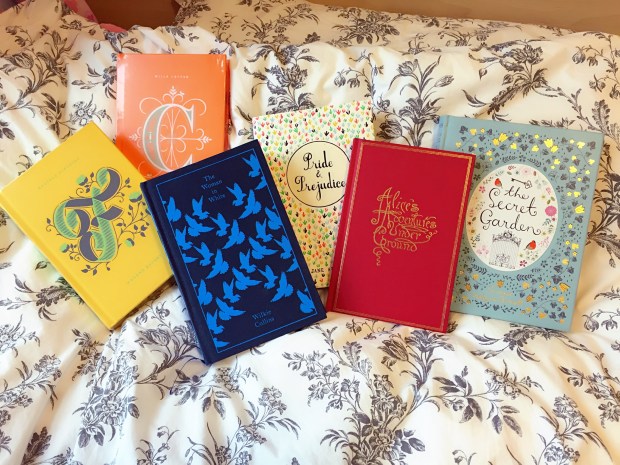
Before I start reviews on these lovely editions, let me start by writing on something long overdue on my blog; ‘Villette’ by Charlotte Brontë.

Both as a human being and a teacher, there passed understanding between Lucy Snowe and I.

After a series of disasters that befall the protagonist Lucy at the start of the novel; she breaks free and starts anew to work on her own merit in a French school. There’s a complexity of feeling and contradictions, by the end you truly appreciate just how many layers the reader is drawn into …her self reliance in new surroundings, her command and discipline over unruly pupils-it involved perseverance (a chapter a night in my case) Lucy too persevered through the pages. By no means faultless, she is strong in her convictions, and a willpower that could probably cut through steel. Her high depreciation for herself means she isn’t able to understand why anyone would love her, and stays much in the shadows. It contrasts against the shining qualities of Ginevra Earnshaw and little ‘Paulina’. I can only compare that Lucy has the constancy of a rock, versus Paulina’s elegance and inner shine, and perhaps- superficial glow of Ginevra.

I wanted to meet the characters and judge for myself what they were really like. It seemed that by the end you are unable to get a clear picture of any individual, which is true because it would take a lifetime (and more!) to really study the complexities of another. Lucy too grew to fondness ~

“There are people from whom we secretly shrink, whom we would personally avoid though reason confesses they are good people, those with faults of tempers …besides whom we live content as if the air about them did us good.”

A lot of French, and I only understood the basics! Sometimes I wished there would be translations in the large segments of text, but you can somehow infer from the passage the meaning, so it wasn’t a big problem. ‘Villette‘ is mysterious, religious, touching almost on the fantastical- but all are resolved and brought back into the realms of reality- from the appearance of the ghostly nun Justine Marie and the walk through the fete at midnight, induced by a drugged opium state.

The ending too leaves it open to the reader to decide- for Lucy her life has been much of disappointment and observation, she never believed anything good would come to her and yet she has experienced more emotions, more heartache and reasons to be grateful than any of the other characters. Through loss, she has gained something else. A deeper understanding and acceptance, a depth of love quite inspirational.

“I used to think what a delight it would be for one who loved him better than he loved himself, to gather and store up those handfuls of gold dust, so recklessly thrown up to heaven’s reckless winds.”

There is something about the Brontë sisters.

In Emily’s ‘Wuthering Heights’, in Anne’s ‘The Tenant of Wildfell Hall’, of Charlotte’s own ‘Jane Eyre’. What do they have in common? Though this novel touches upon Lucy’s complicated relationships and luckless romances, perhaps you can argue that they understand what it is to feel loss, to show inner strength through determination of spirit and passion; you can feel this no doubt from their novels. They makes you uncomfortable, it is unsettling. Nobody can ever confuse ‘Wuthering Heights‘ with a light or easy read. There is no promise of a happy ending. It is about accepting this is what life is, never predictable, never carefree, and definitely not safe from loss on any accounts.

Unless you are an avid literature fan, this may not be the one that opens the avenue of your hidden passion for reading classics. But, I would say it’s worth it if, like me, your passion already is to read as many and as much of them as you can get your hands on.

swirl-divider4


Wuthering Heights by Emily Bronte

“Treachery and violence are spears pointed at both ends; they wound those who resort to them worse than their enemies.” 

swirl-divider4tumblr_moedorC7XV1ss12s7o1_500 (2)

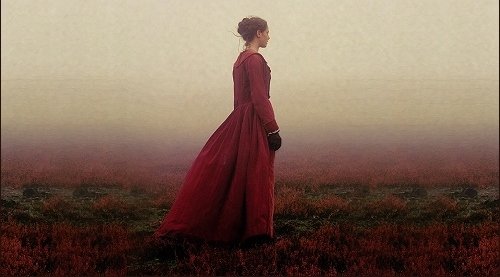
At first glance, Wuthering Heights appears to be a Gothic romance set amidst the wilderness of the Yorkshire moors. It encompasses the ferocity of raw emotions- of treachery, obsession and revenge. W.H is dark and brooding and does not have the light-hearted or witty societal interactions present in Jane Austen’s works. In my opinion, it is less a story of love, and more of possession; something deeper, a rawness of spirit that propels them to inflict the pain and damage to one another. It is almost spiritual in that Heathcliff believes the ghost of Cathy haunts him still after her death, and there will be no peace for them in the afterlife.

The narrative encompasses a period of 50 years and passes through 3 generations of two households- the Lintons and Earnshaws. I can understand why some readers may find it confusing; I had to keep turning back over the pages to find out who was who (cousins marrying cousins and various surname changes). It is told by a housekeeper Nelly Dean and a visitor to the moors- Mr. Lockwood. Between them they manage to piece together the event for the reader (reliable voices or no, it is up to you to judge!) it is one aspect of storytelling. I feel a lot of gothic novels such as Dracula, Frankenstein, Jekyll and Hyde, are written as first person through journals and letters. This allows us to experience from a subjective point of view, but I wonder if this make us feel 100% committed to a character, or even to form our own unbiased opinion.

Wuthering_Heights_family_tree One thing you notice- no character is likeable. Though I felt no emotional connection with the individuals, (Heathcliff is violent, domineering and abusive, Cathy flighty and emotionally erratic), there was something about their plight that moved me. In my opinion a successful book is supposed to make you feel a range of emotions, frustration, anger maybe, or even hatred- these are all significant to your growth as a reader. To move you to feel these things- an essence that makes you feel a natural affinity to a novel. For me W. H though highly dramatized, is closer to reality for me than something like “Pride and Prejudice”. It encompasses the devastation of reality, of death and disappointment and unfulfilled yearnings. I don’t know why I drew this comparison, but I feel W.H has similar gritty, stark truths (murder and mental torture) comparable to certain scenes of the North in ‘Game of Thrones‘, albeit a censored, classical literature version!

Bronte’s depiction of the nature of Heathcliff and the wild Catherine are reflective of the setting- the harsh weather and isolation of the country. W H did leave a lasting impression on me, certain songs would remind me of scenes. I would imagine Cathy tapping on the glass, a ghost girl with a shrill cry and blood dripping on the windowsill, trying to break through the casement to reach inside. All images the Yorkshire Dales can inspire! Honestly, I think it’s important to have some sense of the isolation of the place, to imagine the structure of the buildings, the weather, landscape and daily pursuits of the young Heathcliff and Cathy to get a better idea of what Emily Bronte envisioned to be the backdrop of her novel.

w.heightsAnd last but not least, I will leave you with Hayley Westenra’s version of “Wuthering Heights”(originally sung by Kate Bush)

Some questions I want to ask you guys:

– How is W H comparable to Romeo & Juliet as a love story?

-What do you think Emily Bronte’s main message was, that she hoped to carry through to the reader? Main themes?

-Do you think it’s important to know about the author, in order to understand a book better? Emily died 1 year after completing “Wuthering Heights” at the age of 30, her sister Anne following. They had such short lives (if we compare to the life expectancy now). The novel was published posthumously by her sister Charlotte.

swirl-divider4

Gone With the Wind~A tale of Strength & Survival

2015-04-25-17-24-43_photo (1)What would Scarlet O’Hara do? It’s been months since I finished the book, but there hasn’t been a time when I haven’t aspired towards her strength, steadfastness and down to earth rationality of self-preservation. She can solve a situation with a tirelessness and a fierceness of spirit that shows Scarlet O’Hara as a survivor. But she was not always like this.

Though “Gone with the Wind” is an epic tale of societal breakdown, it is Scarlet’s epic tale of self-discovery and personal development. The people adapt to rise once again to rebuild what is lost – representing raw human spirit and perseverance. She adapts in order to survive. Her defiance is comparable to Melanie’s inner strength of mind, but weak constitution. Softly spoken and kind Melanie who finds no fault in others and loves Scarlet beyond reason. It is Melanie who is the saving grace in the novel, the sticky glue that binds them together. She may not be as physically strong and active as Scarlet, but her presence is almost spiritual, believing in a cause that is beyond reason and often brings her unhappiness. It is not until she is gone, does Scarlet learn to appreciate Melanie’s reliable presence in her life.

Tomorrow is a new day’ she reminds us; the famous lines in the novel. Tomorrow is a new day to think, to fight. And so it seems that Scarlet too believes that prolonging thought, blocking out is a strategy to cope with the problems she faces.

But it is okay. We all do it. And as Scarlet hides her emotions, she develops an exterior shell to protect herself so she does not have to think; to feel. In life, we often feel like falling apart. We feel like nothing makes sense, overwhelmed by situations beyond our control. But we pick ourselves back up again. We keep on persevering because as humans, that’s what we do to as a survival instinct.

Gone with the wind” by Margaret Mitchell is said to be a classic, epic romance story. However I feel that any romance is secondary to the concept of home and a sense of belonging, via the backdrop of the American Civil War. The comfort, safety of her mother’s love and guidance push her onwards through the war torn south. So what does Scarlet actually have to face that contributes to her strength as a character? Through the trials of delivering a baby alone while a battle rages outside, 3 loveless marriages and three children whom she feels no love for, losing her home and supporting 13 + people on her farmland, witnessing the death of her family members and her livelihood, running out of food and fearing death- these are all mental and physical tortures that no person should have to go through; but do so as parts of the rites of life. She has no choice but to overcome them, if not for herself, for the others that rely on her support.

The experiences we have contribute to who we are. Scarlet transforms from a frivolous, superficial and spoilt daughter (not crimes to be sure), to a capable, hardened and strong yes- but also calculating, mercenary and most notably; a selfish woman. Scarlet transforms into a creature of chance and opportunity. Her quest for money and material things consumes her and wrecks any relationship she hopes to have. She is outwardly strong and capable but at what price?? She has no love for her children and has hardened her heart that is too late to be rekindled. It is not until she has lost all she holds dear does she note her priorities. But like any character we learn to care about, we accept her for her good qualities, but also her faults.

So what did I learn from the novel? The characters tireless endurance to get back up and face the next problem. To find excess strength you didn’t know you possessed. Scarlet is comparable to the idealistic and philosophical Ashley. She thrives in the new world, he does not. The only thing that weakens her is her unrequited love for him, he cannot adapt or even survive in the changing South. Though he questions the battle he is fighting, he continues to do so to ‘reclaim’ the old world and what is lost.

We cannot afford to be so self-centred in this materialistic world. It is detrimental- yet still we focus on ourselves. There are some lessons we can take away from it and act as a reminder and comparison to our own lives. There are also two sides of a story. For example I was shocked reading about the KKK. In the narrative, they are sons, husbands, main characters whose will is to defend their family. Scarlet’s own husband is a member. The man she loves is one also. So how can this be? It doesn’t make their actions alright. But once you start to realize two sides, what spurs people on to do what they do and why- it is nothing but a shade of grey between the black and white of clarity.  Sure, life is not so clear cut.

But what about the modern world? How many of us are Ashley & Melanies- idealistic philosophers at heart who mourn the old world and ponder on the change happening around us? The dreamers. And who are the Scarlet & Rhetts- risk takers, practical opportunists who adapt to change and thrive? Or maybe we are a combination of both.

In fact, how many of us want to change? Even if we feel like giving up, do we? It is so easy to want to push away, somehow destroy the pain in our lives. Run away. But it is strength, to accept and overcome it, to deal with it head on and conquer the fear.

swirl-divider4

“Martin Chuzzlewit”- The Dark Horse of Dickens?

swirl-divider4Described by Dickens as “in a hundred points immeasurably the best of my stories”, we come to the 7th of his novels, “Martin Chuzzlewit.” Unfortunately, the general public didn’t seem to agree about it being the best, so it has always remained low profile.

You can argue it’s  natural and typical-an author’s pride, joy and dear baby never seems to be appreciated by others quite as much as they themselves do. So we can feel for Dickens.

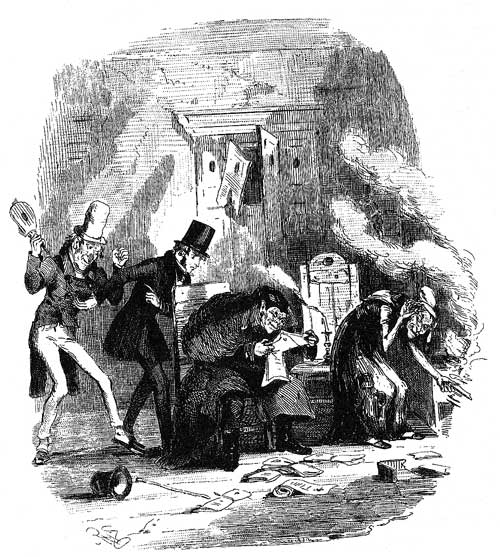
1

Mr Pecksniff and old Mr Chuzzlewit

1) The themes explored in the novel include murder, satire, deception, selfishness, selfishness and more selfishness. (some are not very nice people).

2) The protagonist Martin travels to America to a colony situated in a swamp, he becomes very ill,  is at the brink of death and sinks into a period of ruin and despair. Despite his hardships, he becomes much improved by the time he returns to Britain, with the aid of his very optimistic and jolly friend Mark Tapley.

28bf47250c9a1ca0da28108e141216a8

3) It illustrates Dickens’s turning point towards the darker threads of human nature and refinement of his writing style, comparing the satire and humour of “Nicholas Nickleby” against his later novels such as “Tale of Two Cities”, “Our Mutual Friend”, “Great Expectations” and “Bleak House”. 

4) Dickens portrays America in a poor light; “deface the banner of the nation for an idle rag, pollute it star by star, and cut our stripe by stripe as from the arm of a degraded soldier.” Offensive to many of his American readers? It seems the novel and its characters are quite biased in regards to Dickens’s first visit to the country. He must have had a really bad experience….

Our Mentionable Characters:

  • Mr Pecksniff and his hypocrisy. He is a character you are itching to strangle. Even the online dictionary has an entry in his honour. Pecksniffery/Pecksniffian: adj- affecting benevolence or high moral principles.
mc9

Martin, Mr Pecksniff with his two daughters and Tom Pinch

  • The admirable Tom Pinch who puts others needs before his, humble and loyal. Everyone’s friend. You want to wrap him up in cotton wool and keep him safe. But without the juxtaposition of other villains and the unfair trials Tom must bear, his positive qualities cannot shine through.
  •  Martin is not the focus. He is weak minded, sometimes fickle and lacks a commanding personality despite his improvement later in the novel. An interesting question is how he is comparable to Dickens’s other protagonists?? Oliver Twist, David Copperfield, even Nicholas. (yes it has come to a point where I am on a first name basis with him)
  • Mrs Gamp. Described as a “drunken and verbose” nurse, she provides much comedic relief to the story. Honestly, the things she says hardly makes sense, but she is reliable and does her job well. That’s all we need to know.
22830s

Mrs Gamp immortalised on a stamp

5) Perhaps you need to be a die-hard fan to be motivated to finish this novel. It is quite wordy and so dedicated reading is a must, to pick up from where you left off. Maybe one day I will give it another chance from the beginning! Though it took me a lot longer to complete, nevertheless- I did enjoy it and will be sad when my collection of Dickens is finished! I console myself that there is yet “A Tale of Two Cities” to go…

Wind On Fire Series & Book signing!?

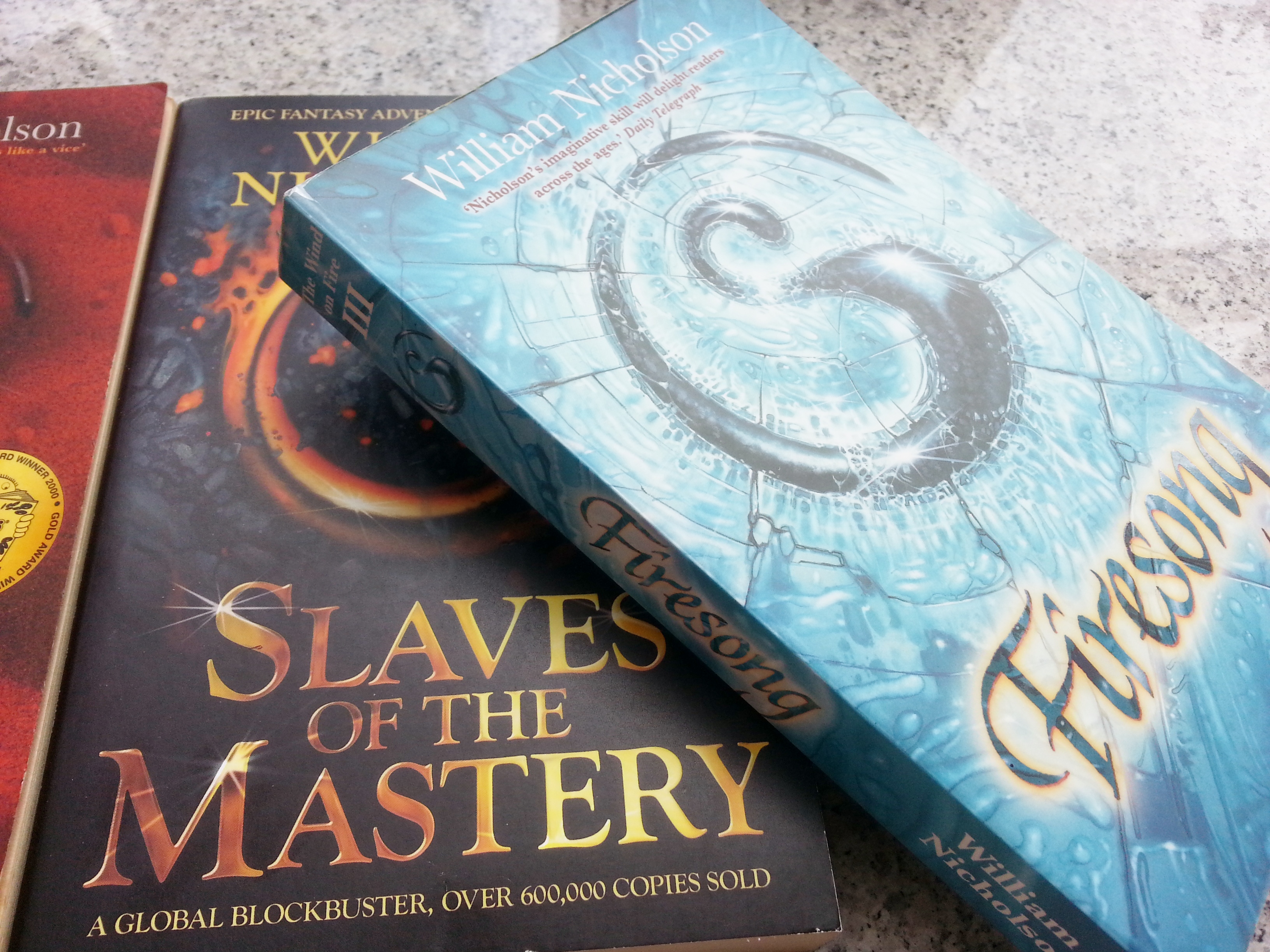
20140828_154226For us 90’s kids, this will bring back memories. Memories of fantasy trilogies, memories of Philip Pullman’s “His Dark Materials”

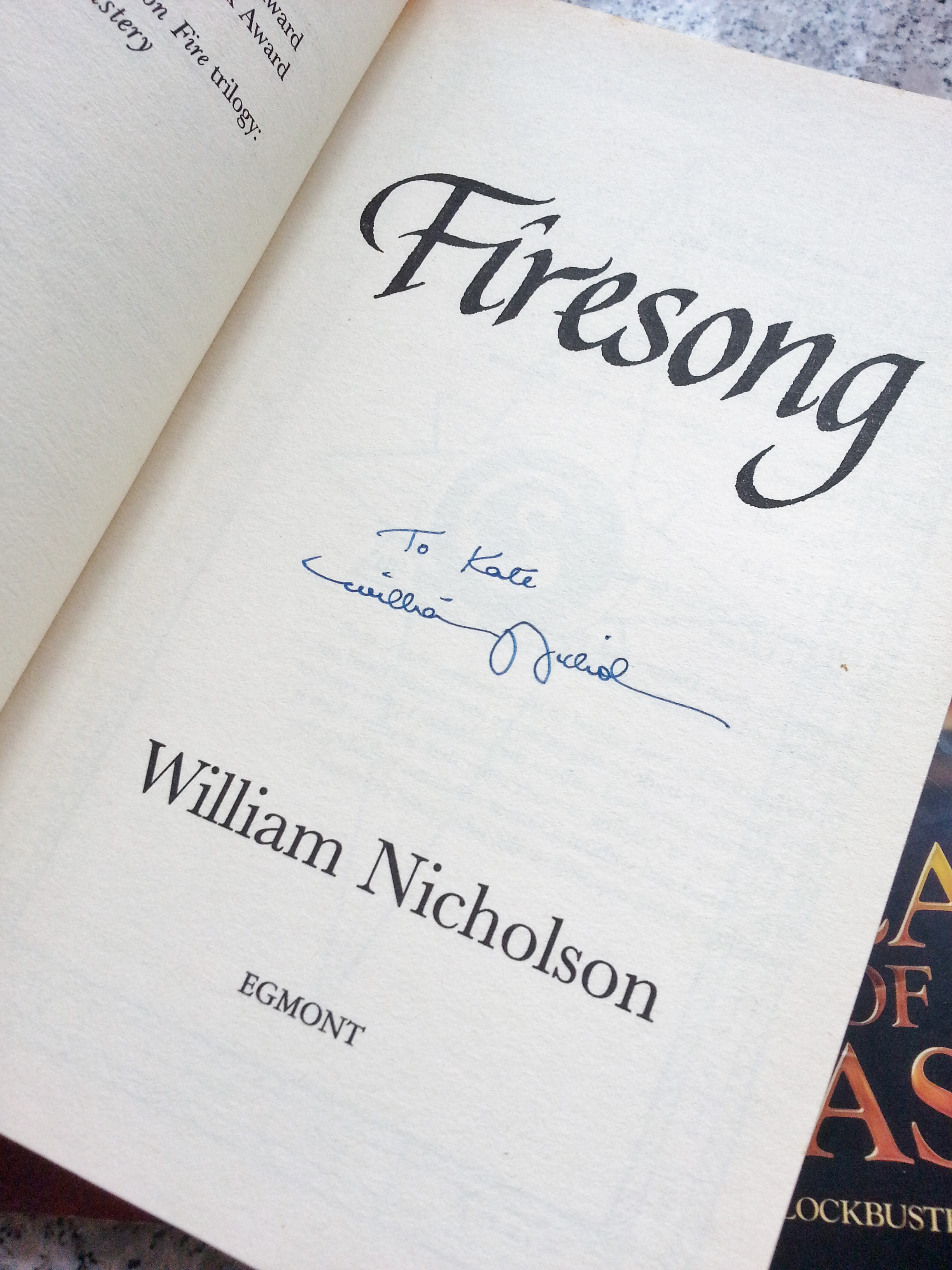
William Nicholson came to my secondary school for a casual book signing in yr 9- it seemed not many people had heard of him at the time and around 6 people showed up. (Me being the book nerd even then) I figured I was in the minority. He didn’t become my favourite teen author until some time after, so in hindsight, boy am I glad I went ~ Fan girl moment!~


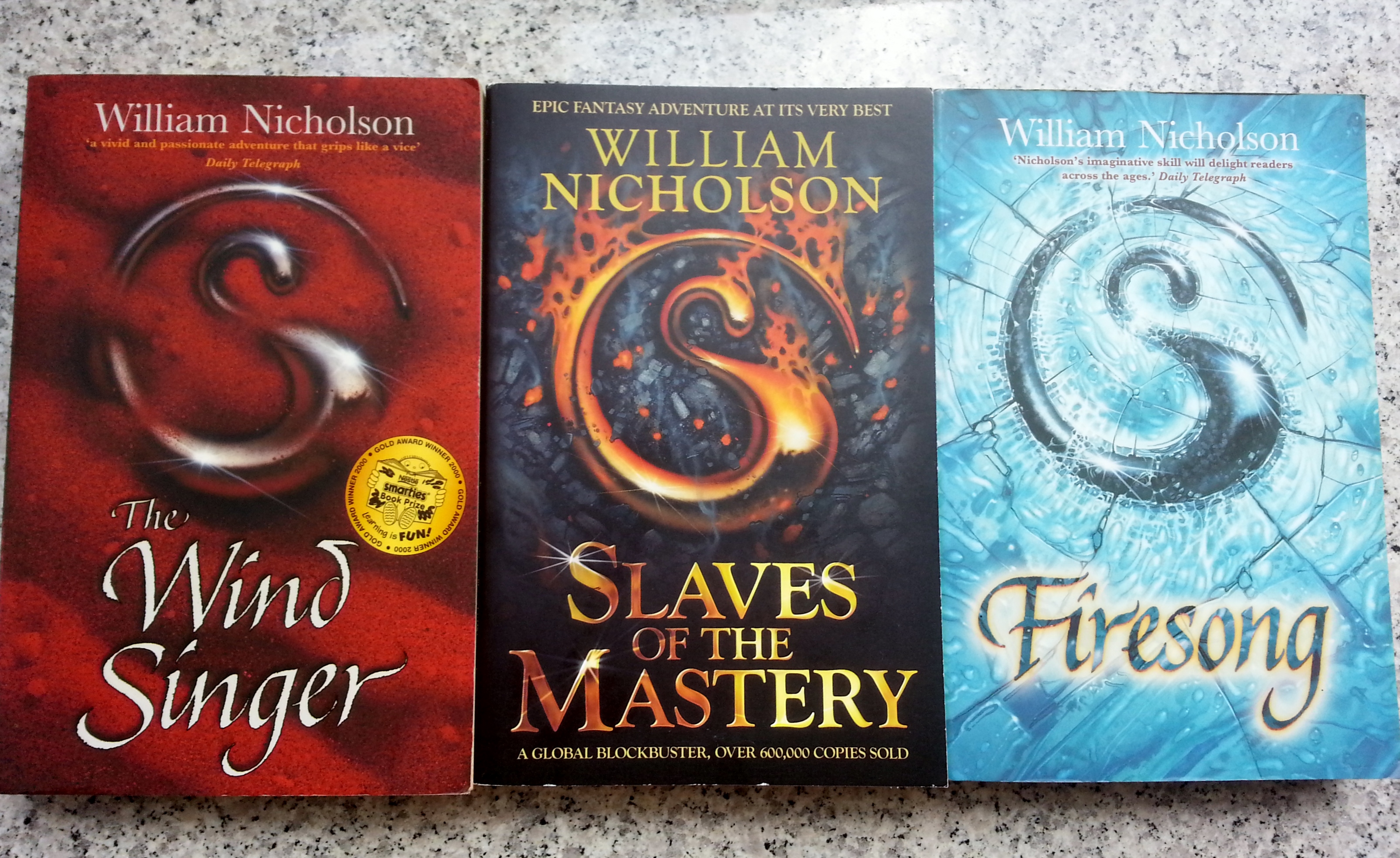
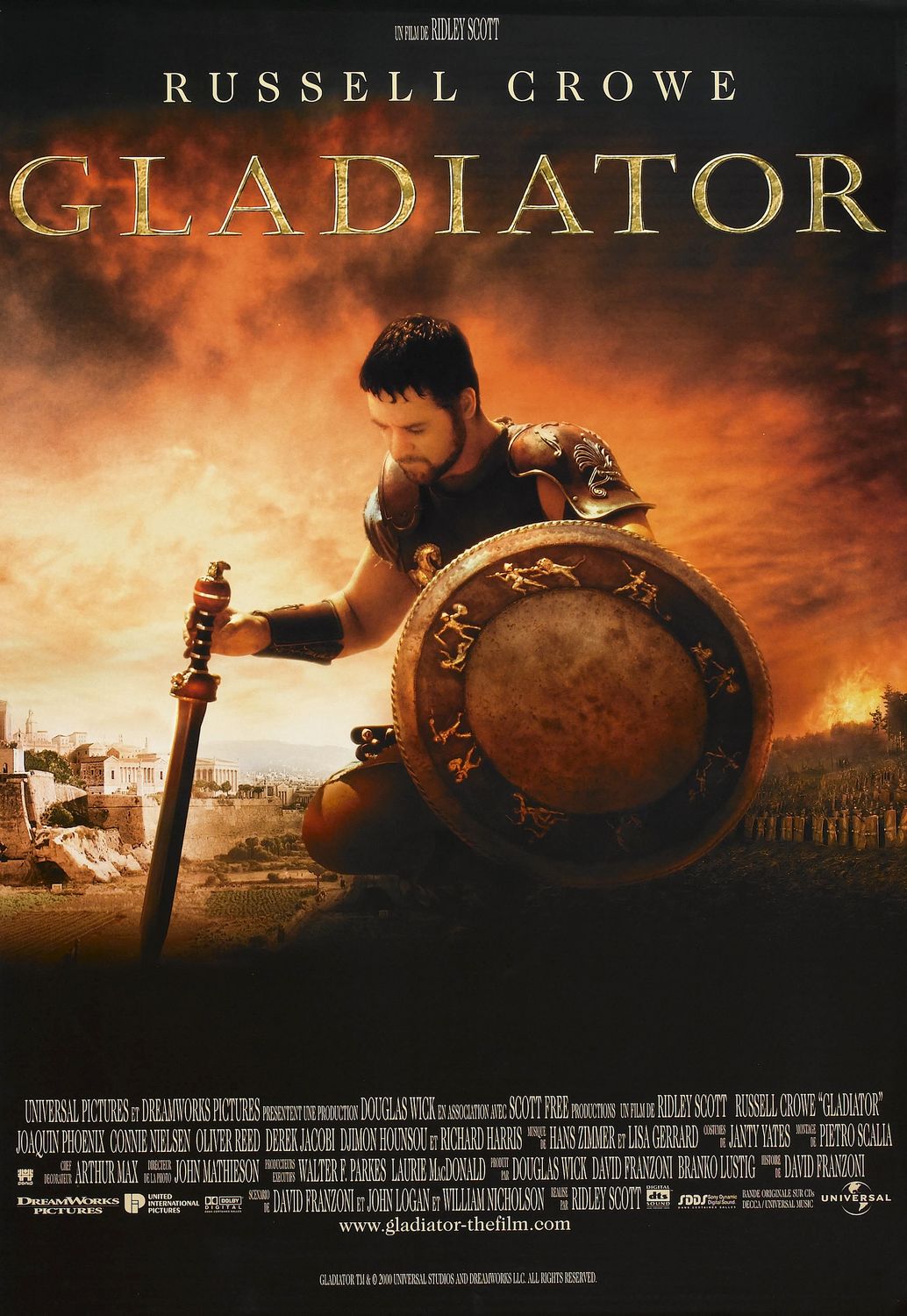
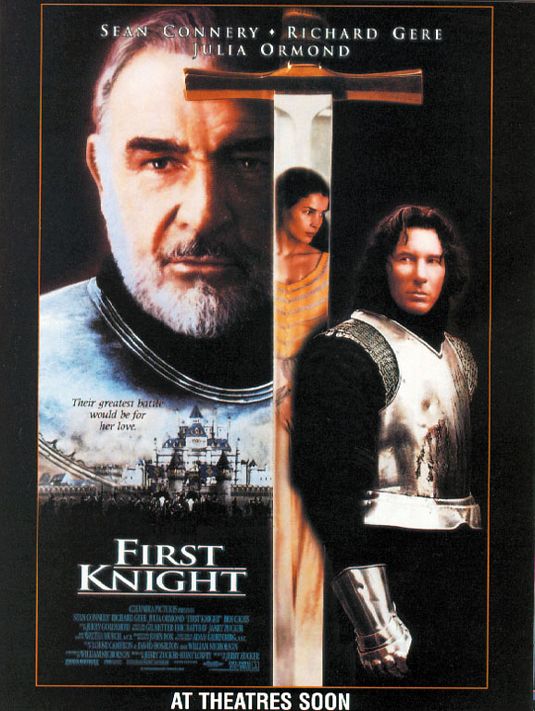
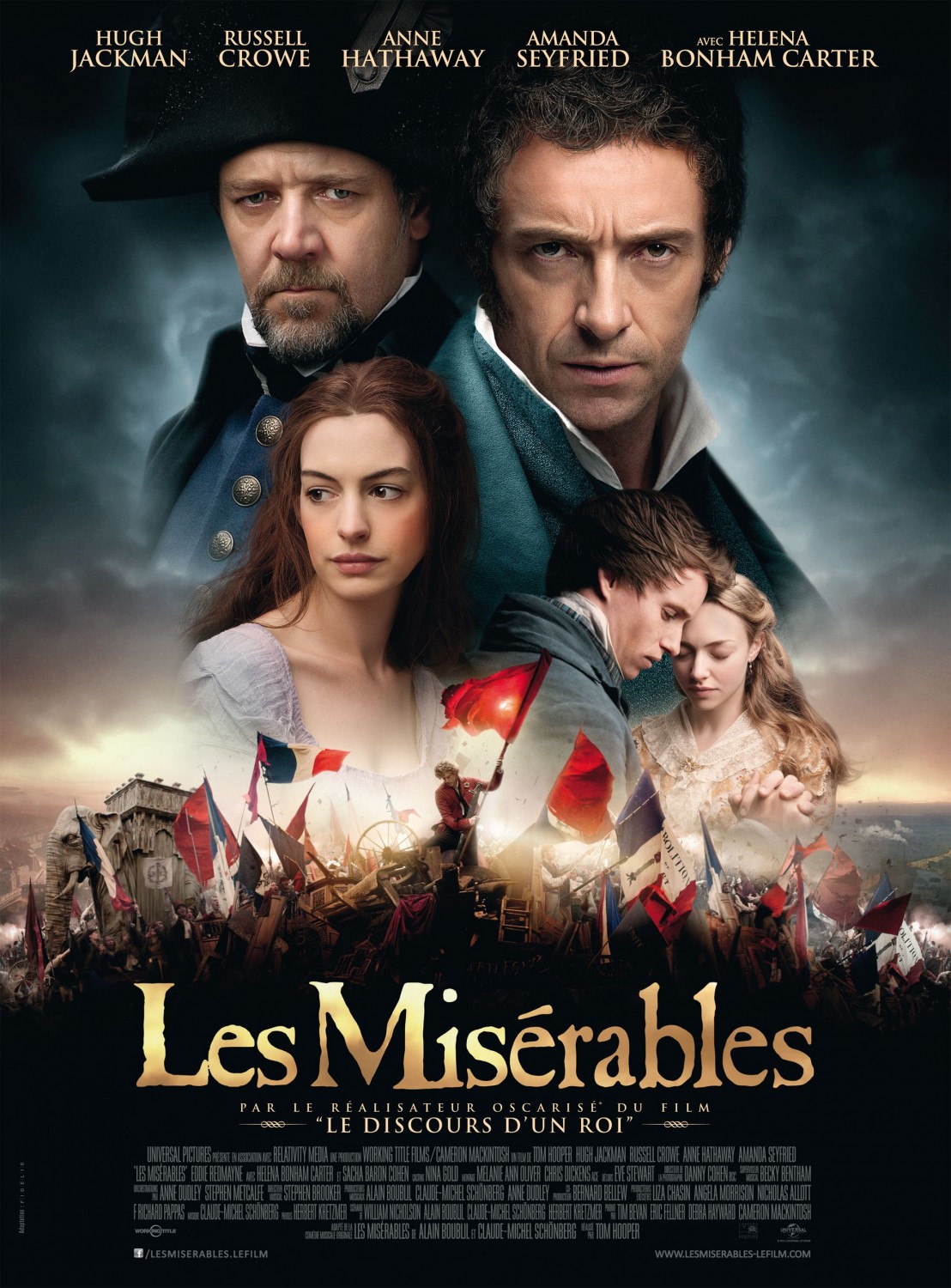
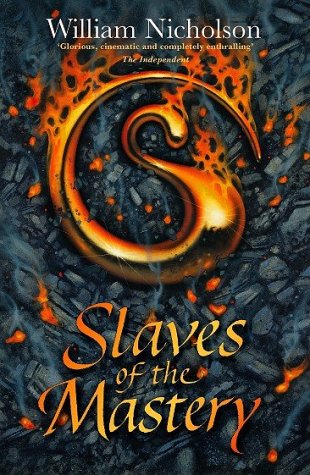
20140828_154214Each book in the trilogy is so different. They can exist independently, or as one long story. They leave you with a strange, dreamy feeling. It takes place in a world that could be our own. In an unknown country, a society tucked away; a city within a city, people so like us and yet live in under such different circumstances. It is this which is so appealing. William Nicholson has an amazing way of establishing a premise for his novels, a world with its own lore that provides a perfect escapism for the reader. In fact, reading the second novel “Slaves of the Mastery” you may think it shares many similarities with Gladiator, with the shadow of a coliseum, fights, spell binding dances and hard weary travelling through dusty terrain. And there’s a reason for this. Wait for it….the author is actually the screen writer for “Gladiator”, “Les Miserables” and “First Knight”.

gladiator  first_knight les_miserables_ver11_xlg

So not only is he a screenwriter, but he’s also a playwright and novelist! However, something I wondered about- the trilogy was never made into a film. Though the books had the potential to be made for the big screens, I’m glad it wasn’t. There are so many books ruined by films that even the authors themselves have come to despise all that their hard work, sweat and passions had gone into. Of course, this isn’t ALWAYS the case.

So what happens in the books? Read on to find out…

windsinger“The Wind Singer”

In the walled city of Aramanth, exams are everything. When Kestrel Hath dares to revel, the Chief Examiner humiliates her father and sentences the whole family to the harshest punishment. Desperate to save them, Kestrel learns the secret of the wind singer and she and her twin brother, Bowman, set out on a terrifying journey to the true source of evil that grips Aramanth.

They go underground and meet mud people, have desert battles aboard fierce ships swept by the winds, defeat an army of beautiful and captivating Zars bent on destroying all in their path, all the while trying to escape old children whose touch will turn them old and frail. So, a lot happens.

There is a five years gap between the first and the second book, and the twins (of about 10 or 11) are kids no longer…

slaves of hte mastery

“Slaves of the Mastery”

“When the ruthless soldiers of the Mastery strike, the city is burned and its people are taken into slavery.” The twins Kestrel and Bowman are separated and she vows revenge. Kestrel is a spirited character, bold and energetic- a kid who never does what she’s asked and a bit of a trouble maker (as shown by the first book!) whereas her brother is quiet and reflective, and has astounding abilities of empathy. (and later, mind reading)  The characters have grown up, and are no longer children and you as the reader follow them on this journey. As action packed as the first book was, the second is on a larger scale, think Lord of the Rings with epic battles…

20140828_154237

“Firesong”
Now we get to the final instalment which is perhaps my favourite, though the most frustrating. The characters are in search of their homeland through ice – to face starvation, blizzards and kidnapping by bandits as well as encountering mind control. This book is a coming of age story, the young, happy go lucky kids in the first book are young adults now, who face very adult fears and concerns. Fear over losing a parent, of unattainable goals, of illness, death and sacrifice. They must all make important decisions.
It made me feel a range of emotions. When I first read it I wasn’t satisfied with the ending, it made me angry. But I think that’s the point of it. To make you feel a range of emotions, happiness, sadness, fear and anger; to think about your own life. The ending wasn’t perfect, and it took me a while to realise that was okay. That’s real life.

*SPOILER ALERT*

The most important thing I learnt from the ending was about faith. Bowman has a blind, almost spiritual faith to guide them to the homeland, a faith in the good of humanity and that good will defeat evil. Kestrel on the other hand, a sceptic from start to finish often has opposing views. She feels helpless and isolated when her brother slowly starts to distance himself from her.

So what initially confused me, is what does happens to Kestrel? It seems each character has a part to play and Kestrel realises she must sacrifice herself, in order to purge the world of the Morah- the evil that spreads across the land. It is through faith in the greater good. But, there is a part of her that lives in the mind of her twin brother, Bowman. I always had the idea that Kestrel and Bowman would remain together- they understood each other and were each a part of the other, with the ability to communicate without speaking. For some reason, the idea of them separating was heartbreaking, and at the time I didn’t understand why they would have to go through life independently, or even, why one had to go away.

20140828_154214

The plot lines are extremely memorable and unique, and very imaginative. SO much happens and yet it all links together perfectly and manages to maintain its simplicity. I imagine the books to represent the elements. The city of Aramanth in the first as earth, the second as fire and destruction, the third air and ice.
They are one of those books that become part of your childhood, growing up with a story that contributes to your concepts and your ideas and if powerful enough- actually form the basis of who you are/will be as an adult.

That’s why children’s and teen books are so important for providing a positive message.

So let me know what you thought of the books, if you have read them or would like to.

If you had 5 minutes with the author, what would you say, or ask?

swirl-divider4

“Nicholas Nickleby”: A Tale of Satire

swirl-divider4“I shall never regret doing as I have—never, if I starve or beg in consequence.”

Nicholas Nickleby by Charles Dickens is a story critics have until recently, found fault in. But it has remained one of the general public’s favourite. Why?

Sure it has aspects of the theatrical and flamboyant. Though critics have found the characters “one dimensional and the plot too episodic”, it had immediate success upon publication. There is something about Nicholas that makes him worthy as Dickens’s male protagonist. He has a mixture of naivety, innocence, optimism and youthful gallantry- the people’s champion through his indignation towards injustice.

Nicholas_nickleby35

Let’s look at a summary: “One of Dickens’s most flamboyant and theatrical novels, Nicholas Nickleby is the story of an impulsive young man who, forced to make his way in the world encounters human life in all its variety: the tyrannical headmaster Wackford Squeers, the tragic orphan Smike, the  ridiculous Mantalinis, the hilarious thespians Mr and Mrs Crummles and their daughter, ‘the infant phenomenon’. Nicholas Nickleby is fired by outrage at cruelty and injustice, but is above all a work filled with riotous, life- affirming comedy.”

Wow. So all that said and done, what did I think after reading it?

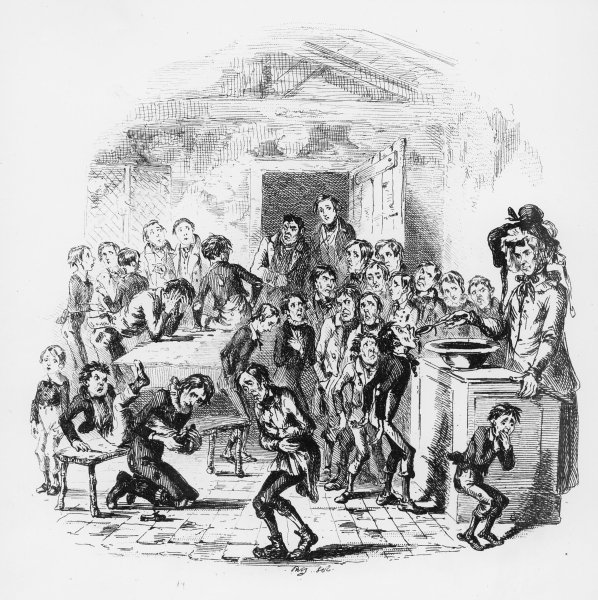
1. Sticking to this ‘outrage at cruelty and injustice’, the best example of this is through his punishment of the tyrannical Yorkshire schoolmaster Wackford Squeers. Taking up a situation as mentor/teacher without real knowledge of his situation, Nicholas witnesses the unjust treatment, starvation, illness, violent beatings and the shoddy education the headmaster preaches. In fact, Dotheboys Hall is not a real hall at all but a house with a sort of farm shed used for teaching the boys. Dickens portrays the horrors of many Yorkshire boarding schools for unwanted children (we are also brought to the attention the cruelty of “evil step parents” who sent their kids to boarding school to get them out of their lives)

Royal-Mail-Stamps-Charles-Dickens-Nickolas-Nickleby

The thrashing of Wackford Squeers, immortalised on a Royal Mail stamp

2. What makes Nicholas’s punishment of Wackford Squeers of Dotheboys Hall so satisfying is that he is not under obligation to Squeers. Nicholas is old enough to take matters into his own hands and make his mark in the world- if he chooses to. He can be impulsive and rash, but essentially he represents the voice and mind of the reader through his indignation of injustice and in this- he never fails.

3. Nicholas Nickleby is Dickens’s third novel after “Oliver Twist”. There are comparisons that can be made in his writing style and focus at the time of publication, to his later works.

4. Nicholas befriends a poor orphan named Smike- a truly tragic and heart breaking character who becomes his fast friend, escaping with him from the boarding school. Smike follows him on his journey throughout the novel.

xjf393881

The internal economy of Dotheboys Hall

5. Like many protagonists, Nicholas is under obligation to someone or another (may it be morally or financially). After his father’s death he becomes “the man of the family”, yet as a country boy in a large city and still ignorant of the ways of the world, must rely on the goodwill of others. Upon his arrival, he and his small family (consisting of mother and sister) are under obligation to his uncle. Well, we can guess how that turns out….

6. The villains in the novel are as bad as those iconic of Dickens. The cynical, miserable Uncle Ralph takes a disliking to his nephew and schemes to undermine and break him- even using his sister Kate as bait. Ralph Nickleby is a man consumed and destroyed by revenge, in which nothing can appease him.

7. The other notable character is Wackford Squeers himself. He is a deplorable and morally perverse character but the reader is often disappointed at how little he appears. The novel naturally follows Nicholas and save from various chapters where the narrative of Ralph takes over, Squeers fades into the background.

ourheritagemedia-fullsize-7c21f4887cef79d3baa7dfc5f51678a0

8. It has become a part of course really, the more I read of Dickens, for the summary to refer to each “book in question” to be the most SATIRICAL and contain Dickens’s MOST realised and comical characters. Each book claims this and well, there is truth in it. It just wouldn’t be a Dickens without them. As a writer, I only wish I could have even half the range of character development as he does…

9. Halfway through the book, Nicholas’s luck changes and so does the pace and structure of the narrative. You are still anxious for Nicholas as his enemies try to outwit and close in on him at every corner, but I found it harder to commit myself, and it took me longer to get through the book.

Nicholas Nickleby dickens-n-nickleby-4

9. I found myself getting bored with some of the events (his pursuit of Madeline Bray). In my opinion, there were characters and events taking place in “Our Mutual Friend” that kept the plot going far quicker. I can’t say I was disappointed exactly, because I was still satisfied with the ending, and how events turned out. However, some of the things in Nicholas Nickleby seemed a bit superfluous and failed to grab me like some of the other books.

10. I saw the BBC series of Nicholas Nickleby once upon a time, and it did influence my image of Nicholas, (softly spoken, tall, gentlemanly) so this was going round in my mind while I was reading the book. Dickens doesn’t actually describe his physical appearance or even his character in detail, so it is up to us; the reader to form our own opinions. But this does not desist from the point that it is almost impossible not to love such a, dare I say it; faultless character. He will remain in the vault, as one of Dickens’s most memorable protagonists to date.

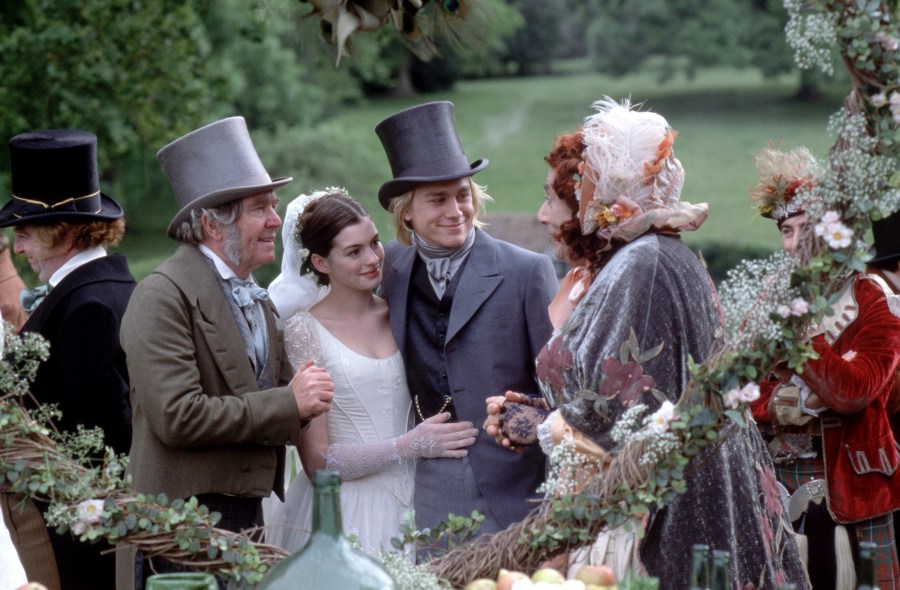
2006052515030601329325

Nicholas Nickleby 2002 film adaptation

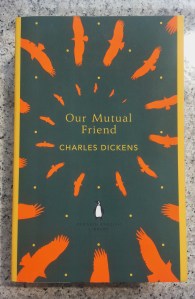
“Our Mutual Friend” Dickens


Finally, I have found time for a Dickens Review! I put these in small bite 20140804_144457sized chunks, for easy viewing…so here begins;
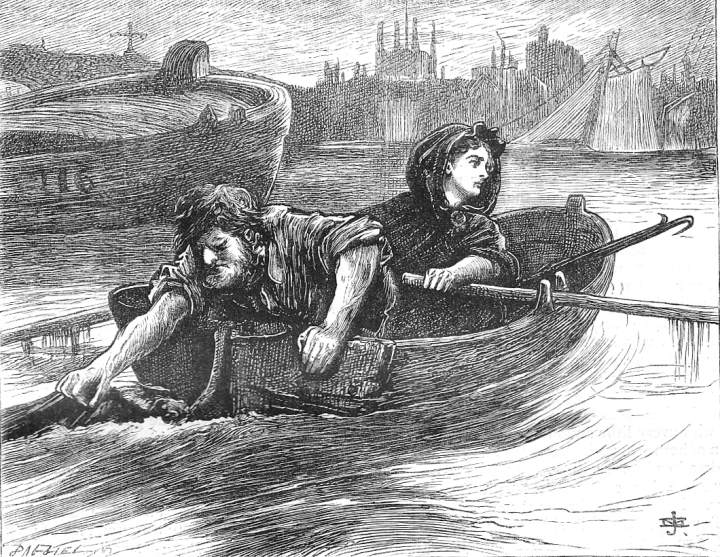
  • Summary as taken from the blurb of Our Mutual Friend: “Dicken’s last completed novel and one of the greatest books about London, ‘Our Mutual Friend‘ is a dark, enigmatic portrayal of a city corrupted by money.When a body is pulled out of the Thames, it is presumed to be John Harmon, drowned under suspicious circumstances before he could claim the fortune his father made from rubbish heaps. This mystery impinges on the lives of the naiive, hardworking Boffins, the riverside scavenger Gaffer Hexam, his beautiful daughter Lizzie, the mercenary Bella Wilfer and the doll’s dressmaker Jenny Wren, in a story of greed, death and renewal.”16

1. A dark story, it is considered one of Dicken’s most “sophisticated works”, though perhaps, one of his least well known.

2. The novel has a vast array of memorable characters which, through his wit and humour; you soon grow attached to.Though the language is less straight forward compared to his earlier novels, don’t be put off. The narrative is very well thought out and incredibly complex with intricate and unexpected plot lines. Compare the layers to an onion…

3. Death, intrigue, mystery, romance – it has everything. You are fooled along with a great number of characters along the twists and turns of a very complex narrative.Very satisfying as characters get their just rewards and no evil deed goes unnoticed, or unpunished. For me, the reading experience has to hold a variety of things, just like my favourite films. Action adventure mixed with fantasy and a bit of romance. It’s great how though Dickens manages to portray the worst of human nature in squalid London and the boundaries of social class- there is a particularly heart warming scene between John Rokesmith and Bella Wilfer that I always find myself going back to and just melts my heart (yup, I’ve bookmarked the pages)

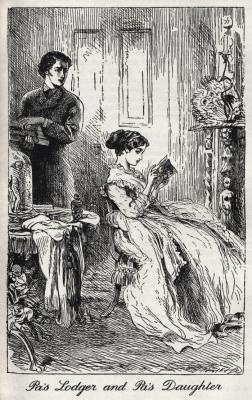
OMF-Lodger-and-Daughter4.Like each of his books, there are some great characters- no matter what shape or form they take, from the devilish and hideous dwarf Quilp in “The Old Curiosity Shop” who delights in playing tricks on others and getting the better of them, to the one legged and villainous Silas Wegg who circulates the pages of “Our Mutual Friend.”

5.However one thing about Dickens most people notice, is that his female characters are often under developed. They either hold supporting roles, as spinsters, the frugal or the vain and frivolous, or proud mothers. Young females are all dignified, elegant, pretty who undergo some tragedy or suffering which make them all the more beautiful and heroic; sought after and admired by men of all ages.

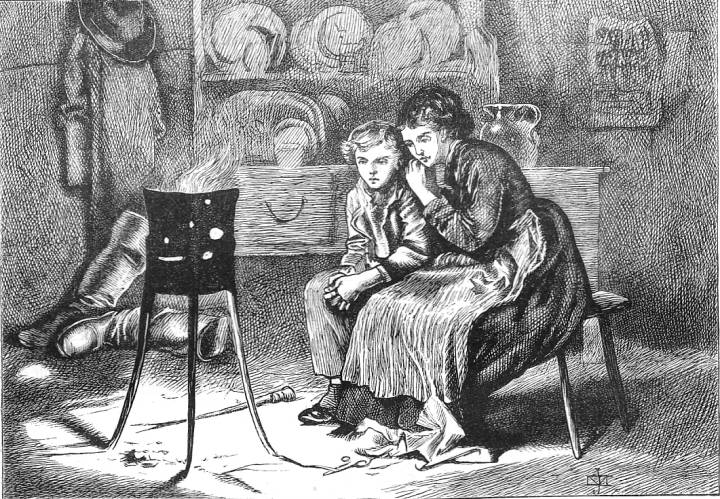
6. The illustrations are wonderfully detailed. They really bring the characters to life and gives that something bit extra to your reading experience.

177.The novel exemplifies on the corruption money can bring, the greed it excites, and how it effects the lives of those it touches.

8.After finishing the book, I thought up a hierarchy of wealth of all of the characters in the novel, taking into consideration their fluctuating social position. This may seem a bit time consuming and superfluous, but the story made me think long after I had closed its pages,(often as I was lying awake at night) and it was my way of sorting through the vast array of characters in the novel. I don’t want to give away spoilers by laying it out in all its glory. So I will let you read it first…

(Follow for more bite sized reviews on “Barnaby Rudge”, “Nicholas Nickleby” and other Charles Dickens novels.) 

The Narrative Voice of Death: “The Book Thief” by Markus Zusak

liesel-libraryThe narrative voice, as one who unravels a story to the reader; is interesting to explore as it bring a unique perspective to the novel. In this case, the narrative voice of Death acts as a director of the lives he witnesses, a storyteller masking the misery during the Holocaust and the suffering of the Jews during WW2 through the simplicity of storytelling. “The Book Thief” takes the form of a Meta-fictional style, the act of writing becomes the subject; of which the character of Death capitalises on the “truth” blending fiction and reality through irony and self reflection. In the text, the narrator reflects on the capability of humanity and mankind’s ability to be simultaneously beautiful and destructive; characteristics which often puzzle and surprise Death. 

Death is an omnipresent and omniscient force whose job is to collect souls; it is humanised and displays a vulnerability and sentimentality of spirit. The question is put forth to the reader; what if Death can possess the ability to feel and care for the lives of those it witnesses?  As the narrator itself claims, “the human heart is a line, whereas my own is a circle, and I have the endless ability to be in the right place at the right time. The consequence of this is that I am always finding humans at their best and worst.  I see their ugly and beauty and wonder how the same thing can be both.”(p.491) It is through the narrative voice which brings our attention to the nature of mankind and teaches us to observe what we as humans are capable of; and the possible consequences of our choices in life.

f992718582e6ba92d30f06f6a156840cIt points out it is often misconstrued as a stereotypical being, a Grim Reaper figure with a cloak and scythe. Cynically, it continues, “You want to know what I truly look like? I’ll help you out. Find yourself a mirror while I continue.” (p.307) Though this is metaphorical, it brings to the reader’s attention how Death is within all of us, our fears, hopes. The concept is all around and part of us, it is something we should not be afraid of. So what shapes our view of Death? Is it shaped by what we see in the media, as shown by the vision of the Grim Reaper, or by our experiences? From an early age, our first experience of Death is perhaps through the loss of a pet. If a pet dies, parents struggle with how best to share this information in a way which will not horrify or scar the child, as it is something which will remain in their experiences for years to come. For us all, death is equated with sadness and pain so it is no surprise we are scared of it. “Those kinds of souls always do – the best ones. The ones who rise up and say “I know who you are and I am ready.” (p.532) The narrator, though direct and frank in its choice of words; illustrates to the reader the familiarity it has with humans, like meeting a close friend. There is a comfort in that, it is familiar with its occupation and therefore imparts to the reader the lessons and inevitability of life to soften the transition.  

The Book Thief

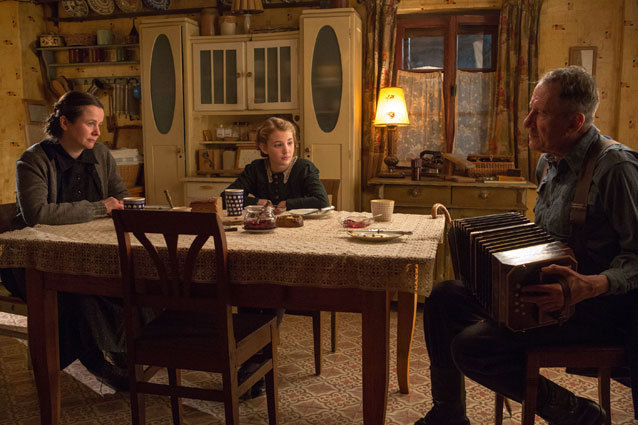
“The Book Thief” (2013) Liesel and Rudy race each other

Death often refers to Liesel as the “Book Thief” in the novel. The title of the novel is dedicated to her. So what is the significance? The reason for this is her love for stealing books. In the case of Liesel, not only is stealing a representation of a girl’s defiance against adversary and the influence of the Nazi regime but she is taking her education into her own hands.

So is it acceptable to steal something if it is abandoned, or left to burn? As children we are taught to treat books with respect, to assign value to words. Nowadays we live in a society which relies predominantly on technology. In the West, there is still a focus on reading for pleasure, yet less and less children have the motivation or desire to read storybooks, especially ones that do not contribute to schooling. So how do we encourage kids to read and share their love of reading with others? Like Liesel it can be a very special and personal experience. For her, it is the thrill of stealing something back- everyone has their own motivation, the conscious act of choosing their first book and their sense of achievement when they finish it. Through a Russian Doll effect, of a story within a story, the narrator Death has a unique ability to reignite the passion to read, the act of picking up a book and feeling its spine, the letters on the cover. Each book is different, just like each individual in the world. Perhaps it is this love and treasuring of words that makes Liesel’s actions more acceptable to the reader; after all, Death does not judge Liesel for her acts of stealing but regards her determination with pleasant surprise.

Liesel in the neighbour’s library

A history lesson

Death can be considered a very unlikely narrator giving a history lesson to children in the text. Comparable to the autobiography “Anne Frank: The Diary of a Young Girl” from a Jewish girl’s perspective, “The Book Thief” focuses on a German girl’s point of view. Though this is a novel, many children today live similar lives to Liesel; orphans, homeless, starving in the backdrop of war. Death serves as the omnipresent and omniscient voice that as a reader, we do not doubt, focusing on children and how war impacts on them. The world is watching events unfold in the past, yet do we learn from our mistakes? Is history repeating itself? The narrator wishes to highlight on this important point, encouraging the reader to think and, as mentioned above to form their own opinions on what is right and wrong. In fact, the narrator believes: Living a good or bad life is its own reward or punishment.

book-thief-6

“The Book Thief” (2013) Liesel & Hans

Language to convey meaning

Another point to discuss in relation to Death’s narrative voice is the understanding of the structure of language to convey meaning, “the words were on their way and when they arrived, Liesel would hold them in her hands like the clouds and she would wring them out; like the rain. (p. 85)” It is the unexpectedness of language and the unique way Death offers information. It explores everyday and common aspects such as rain and clouds but describes it in a way which seems unique and different to the reader; as if they are seeing it for the first time.

Book_Thief21

“The Book Thief” (2013) The Hubermanns’ at home

The narrative voice of Death is a teacher, a guide and storyteller. Death transcends time and place, encouraging us to think about topics in a way we are unaccustomed to, allowing the reader to learn about themselves through the narrative. It is a process with no definitive outcome. It is the punishment and reward of living, a story of hope and the beauty of mankind despite humans ability to perform such horrors and destruction.Essentially the novel is a universal book because it appeals to our human psyche, our compassion and our sense of right and wrong; of injustice. No matter our background, our situation in life or where we come from, there is undeniably something for everyone in the novel. May it be the love of books, of music, of singing or reading and drawing. Of friendship and family and laughter, the narrative voice of Death cements all together through its brilliant storytelling.

The-Book-Thief-cover


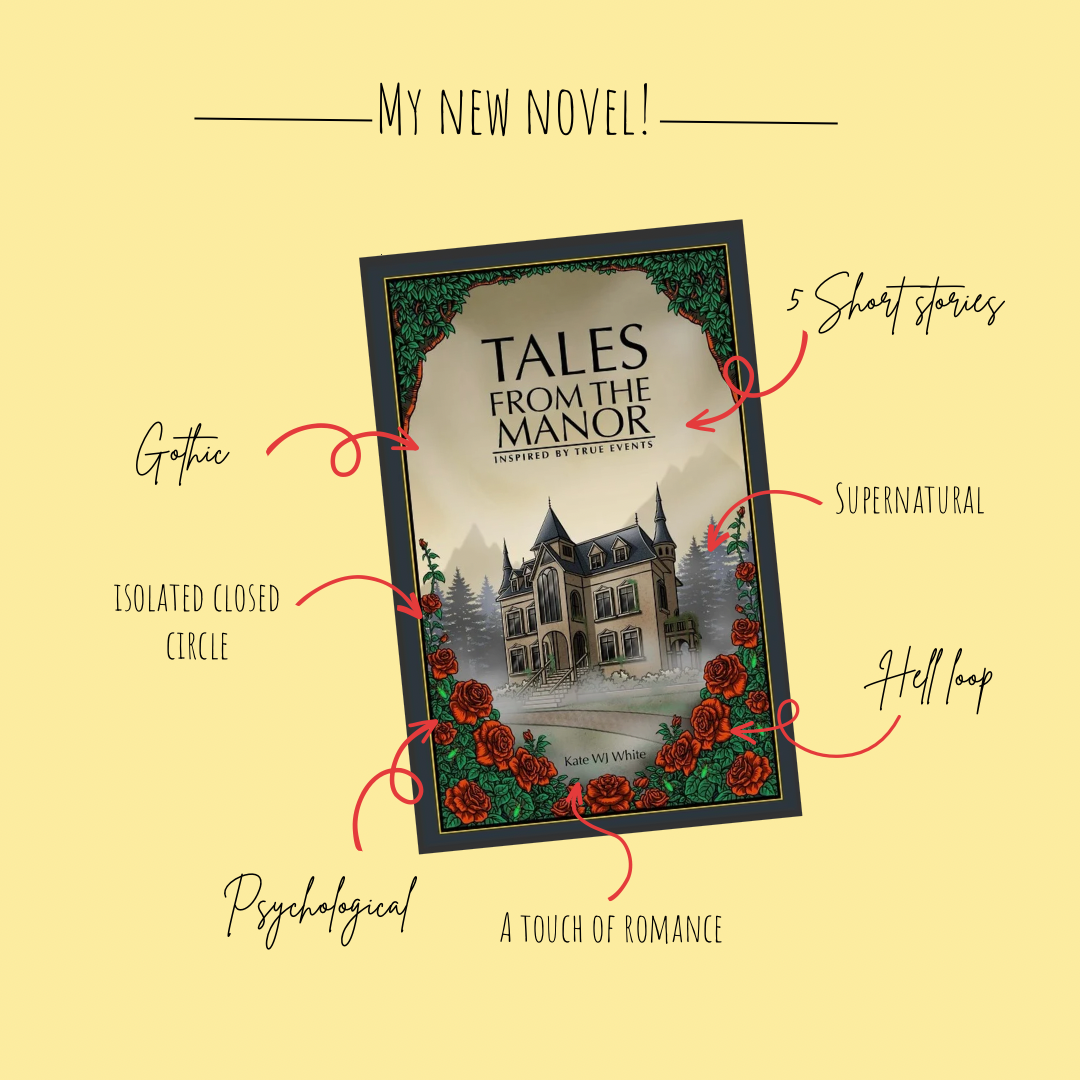
Exciting news! My new eerie short story collection ‘Tales from the Manor’ is available on Amazon! Check out my tabs above to get more info, free artwork, excerpts and more! ❤ Link below. Thank you friends.

https://www.amazon.co.uk/dp/B0DM43R7FT


Tales from the Manor’ tropes
Hardcover edition – matt texture
Full cover design & back cover

Copyright © 2014 by Kate W J White (All Rights Reserved)

Bookilm Day 1: The Spirit of Robin Hood


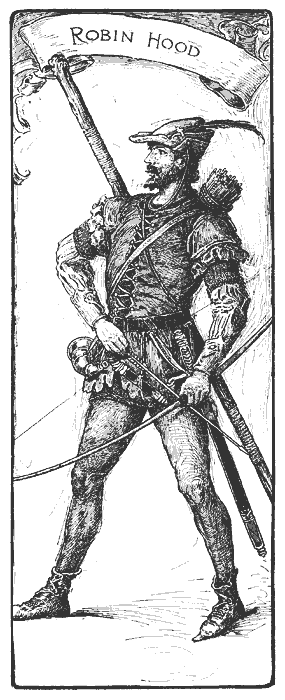
Most people remember the outlaw Robin Hood as robbing the rich to give to throbin-hood-clip-art-10e poor. Yet this is only on the surface. In fact, the earlier ballads told of him doing no such thing. It was only at the beginning of the 19th Century that he has become known for this, his skill at archery- his ability to shoot arrows from a great distance to land its target and being good with the sword. Though originally he is shown as a Yeoman, (a commoner who cultivates the land) later on Robin is portrayed to have lands and position as Earl of Huntingdon, which have been snatched from him by the eager and cunning hands of the Sheriff. In the versions that followed, it is said that Robin went on the crusades to fight in the Holy War for King Richard the Lionheart. His acts of courage and battle hardy skills are all contributing factors to appoint him the leader of the outlaws.
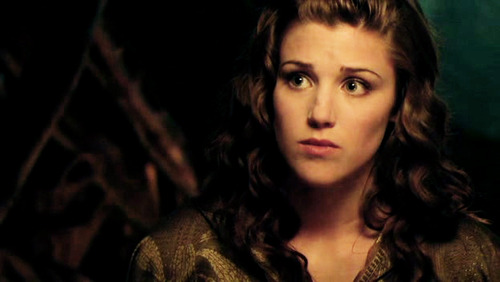
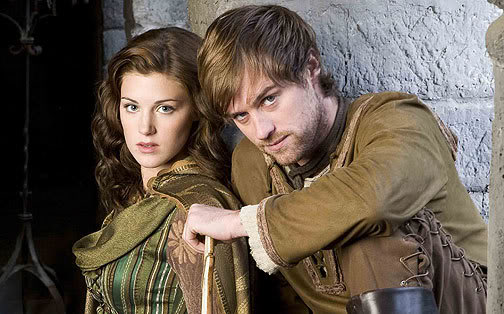
So what do we know about Robin Hood? At first glance he is considered loyal and brave;a good leader. He would lay down his life for his men, and they for him. He does not harm women or children and always comes to the rescue at his own peril, to save those about to be executed; or hung or amputated.

No honour among thieves? Seems there is- he punishes the corrupt and is saviour of the oppressed.

In this way, Robin typically signifies a ‘concept’, a martyr of the people, those who are too weak to look after themselves and are taken advantage of by those in power and authority. The stories tell of his adventures as he one by one recruits his men, from Little John, to Allen a Dale, Will Scarlet, Friar Tuck and Much to name but a few, not forgetting his childhood sweetheart and heroine Maid Marian. In the retelling, their adventures often involve a fight in each chapter and the scrapes they get into, but Robin Hood and his merry men clad in Lincoln Green always triumph over injustice and the evil Sheriff of Nottingham.

marian

Marian

The character of Marian is depicted a spirited and outspoken lady who, not only is good at fighting herself, but often disguises herself as a man in order to avoid detection in and out of the castle. She is seen helping those in need and acts as spy for Robin and his gang in Sherwood Forest whenever there is need.

It is interesting to see the changes made in the adaptations of the original ballad, from modern day TV series to films that tell of Robin Hood and his merry men. There have been countless adaptations which have featured the happy outlaw and cater for a modern audience.

robin and marian

Robin & Marian (Robin Hood BBC TV Series)

For Saturday night viewers, those who remember the ‘Robin Hood’ series starring Jonas Armstrong (before ‘Strictly Come Dancing’ & the results show)- it is a family show that caters for a younger audience. Robin is in his mid 20’s, with the attractive Marian who, along with the presence of Richard Armitage as the sneering leather clad Guy of Gisbourne, was one of the main reasons I watched the show. When she left, the show introduced a variety of meaningless characters with a plot bordering on the ridiculous. They were there for the sake of being evil, but nothing could bring Marian back, and shattered all hopes of Robin and Marian being together like they should be. The show only lasted three seasons before it ended.

To act as a further comparison, later films (including Ridley Scott’s adaptation of the popular legend and ‘Prince of Thieves‘) reveal a mature Marian and Robin, supporting a different take on the ballad. A more accurate portrayal, in my opinion, of the stark and brutal reality during Robin Hood’s lifetime.

robin-hood-prince-of-thieves

“Prince of Thieves” 1991 film

There is no denying there has always been comedy in Robin Hood. From the fierce yet frustrated sheriff who is always duped by Robin, to the adventures of the merry men whose presence it can be argued; is to provide comedic relief; there is something to make it light hearted and enjoyable for all audiences.

The fluctuation of character portrayals can be quite amazing. Let’s take Guy of Gisbourne for example.

In Howard Pyle’s “The Merry Adventures of Robin Hood”, he appears as a stranger in the forest who is killed within a chapter by Robin in a duel. In the 1956 version by Roger Lancelyn Green, he is the right hand man of the Sheriff of Nottingham, who tries to woe Marian and pursues her any chance he can get. In the 1991 Kevin Costner version (of which the sheriff is played by Alan Rickman and Richard the Lionheart by Sean Connery) Guy of Gisbourne is portrayed as the Sheriff’s cousin, whom he subsequently stabs to death when he fails to succeed in the capture of Robin.


Untitled Robin Hood Adventure

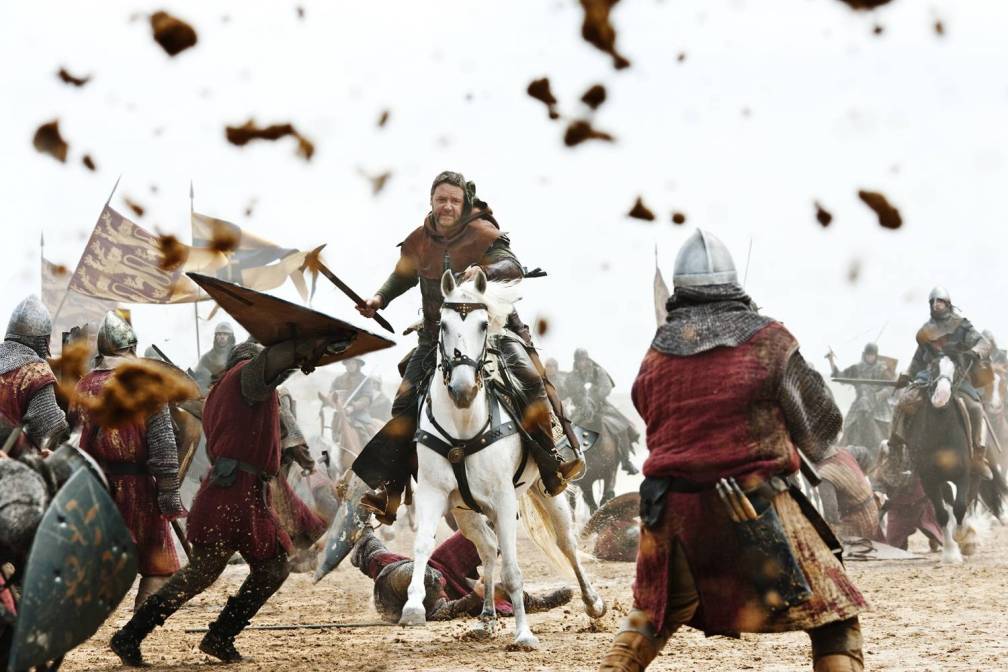
Ridley Scott’s 2010 film

Now we come to the the most recent film directed by Ridley Scott. Guy of Gisbourne does not even appear in this, and the Sheriff is portrayed as a snivelling and power hungry lacky of Prince John who hardly makes an appearance more than three times in the entire film. Perhaps this is due to the vast number of villains, with Prince John holding a prominent role, along with the new character of Godfrey.

Ultimately, whether Robin Hood existed or not matters little. The ‘idea’ of him has transcended time- a hero to represent and defend the people against corrupt lords and the law of the land, inspiring others with his spirit, to address the balance between the rich and the poor; issues which are important to this day.