Bookilm Day 2: Childhood Fear of Witches?

600full-the-witches-posterLuke is a character you easily identify with as a kid, he’s loyal, adventurous, knows the difference between right and wrong, somewhat geeky with a wide eyed innocence.  Even if you can’t relate to him, you can understand him as Roald Dahl’s male protagonist.

luke

Luke in “The Witches” (1990)

So what happens in the film? Luke, after the death of his parents moves from Norway to England with his grandmother, who often tells him stories of witches. They go on a trip to Cornwall, with his two pet mice, but things start to take a strange turn. Chasing his escaped mice, William and Mary, he happens to be in a RSPCC board meeting- a room filled with women, but as he soon finds out, witches. They take off their wigs, their gloves, their shoes. He witnesses them turn a small boy into a mouse. He makes an escape, but unfortunately is captured and shares the same fate as his friend. But no, it does not stop there, and being a children’s film, the brave Luke must find a way to destroy all the witches, in the body of a small furry talking mouse.

The term ‘witch’ has all sorts of connotations, they are portrayed as old, crooked with gnarled noses, warts, hump backed and altogether really ugly. The witches in Roald Dahl’s books aren’t that different- they are bald, have square feet and no toes, blue spit, and purple eyes.
They’re not supposed to be nice. They are there to scare children senseless.


tumblr_m9wdcfsSh61qznur9o1_400

Grand High Witch- Quentin Blake illustration

The book allows you to use your imagination in its full fledged form, but you can argue whether this fear factor is reduced, translated onto the big screen. Personally I don’t feel this to be true. You have to take into account this is a 1990’s film, using props with no CGI. As a kid, there’s something grossly realistic about seeing a woman peel her face off in front of the audience, showing square feet and purple eyes and gnarled and crooked fingers in all their glory.

For the longest time I believed my dad when he said witches were real and I had this fear and also constant anticipation of catching one in the act of smuggling away a child, or hunting them down, just like Luke does-I was captivated by witches, and wished to be a good witch with magical powers. Much like “Matilda” and her ability to move things with her mind, the stuff of children’s dreams.

So here are some points to consider.

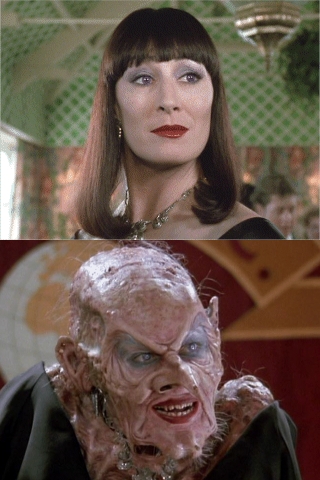
a) The Grand High Witch- the worst of all the witches, is seen to have a pretty mask which covers her true form so as better to fool people with. Moral: Witches are always in disguise, just because they are attractive doesn’t make them more trustworthy. And let’s not forget when the Grand High Witch takes off her mask- it is the stuff of nightmares.

8445-21462

Angelica Huston as The Grand High Witch

b) Luke is advised not to shower too often by his grandmother, in case the witches sniff him out, and clean children smell just like fresh dogs droppings- so keep a look out for women in the streets who are holding their nose when they pass you!

c) Witches are all women (though, if you look closely in the film, some of them are male, probably due to lack of members to cast)

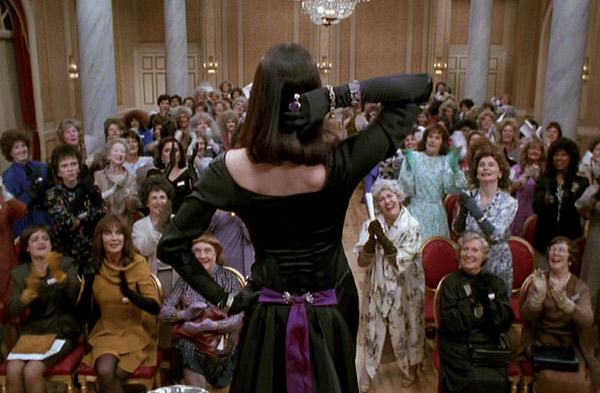
thewitches21

RSPCC board meeting (“The Witches” 1990)

d) They plan on setting up sweet shops all around England in order to poison children and turn them into mice so they can be squelched.

e) They commit vile and despicable acts of cruelty and show no remorse.

So what does this teach young, impressionable young kids?

“She might even be your lovely school-teacher who is reading these words to you at this very moment. Look carefully at that teacher. Perhaps she is smiling at the absurdity of such a suggestion. Don’t let that put you off. It could be part of cleverness….”

dahl_which-one-is-the-witch

Roald Dahl illustrations- which one is the witch

That they go around suspecting everyone is a witch- at least until the effects of the story wear off.
But it does draw attention to trusting strangers and accepting things from them. One memorable part is when Luke is playing in his tree-house, and a witch appears below and tries to entice him down with a bar of chocolate. Now, if Luke had not been wise enough, (and if the woman didn’t have purple eyes), well, we all know what might have happened.

erica

Erica “The Witches”

Perhaps another memorable in the story is of a little Norwegian girl named Erica, who after being kidnapped by a witch, appears in her father’s painting. However, not only does she often change position in the painting, feeding the ducks, or standing in the farmyard; but she also grows older. The years go by, until one day- being an old woman, she disappears from the painting altogether.


Erica vanishes into the Painting

Creepy huh?

We assume she has been killed by a witch, but her ‘presence’ in the painting makes it all so eerie and gives you goosebumps. Is it really her in the painting? Her ghostly echo is heard calling ‘Papa’ several times. Who would cause such torment?
All these thoughts spiral in a child’s mind. And the answer to that is witches. They are demonic and punish children for no reason at all.

But don’t worry, because as there are bad witches, there are also good witches that counteract their evil. Phew!

Just as well they aren’t real, right?

swirl-divider4
Here are some good extracts from Roald Dahl, which can be good discussion points for students in class. What do they teach children? And does this apply to real life?
“If a person has ugly thoughts, it begins to show on the face. And when that person has ugly thoughts every day, every week, every year, the face gets uglier and uglier until you can hardly bear to look at it.
A person who has good thoughts cannot ever be ugly. You can have a wonky nose and a crooked mouth and a double chin and stick-out teeth, but if you have good thoughts it will shine out of your face like sunbeams and you will always look lovely.”- The Twits

“And above all, watch with glittering eyes the whole world around you because the greatest secrets are always hidden in the most unlikely places. Those who don’t believe in magic will never find it.”– Roald Dahl

“I have a passion for teaching kids to become readers, to become comfortable with a book, not daunted. Books shouldn’t be daunting, they should be funny, exciting and wonderful; and learning to be a reader gives a terrific advantage.”– Roald Dahl

“It doesn’t matter who you are or what you look like, so long as somebody loves you.”– The Witches

Modern Fairytale

do_you_believe_in_fairy_tales___by_ammozart-d5gxlce

-Welcome to my library says the beast. Two storeys to be read at your leisure. All yours.

-No thanks. Belle shows him her Kindle, held to her chest like an over swaddled baby-binder. This is your whole library.

-Can you eat it? Smell it, touch it, lick it? Didn’t think so, says the beast. It is not a proper thing you can drop in a bath, crumple in your bag until it is dog-eared, use as a coaster -no, it’s a travesty. You cannot eat a Kindle, and that’s a fact.

Copyright © 2014 by Kate W J White (All Rights Reserved)

~ The Fire Trees ~


Amazing_Mountain_Scenery_freecomputerdesktopwallpaper_1920

There is a dam in the distance, with wide walls
Purple leaves that bob in the valley
The mountains with the shadows that burn
And the snow that meanders disease
I ride with my horse the patches of moon
Upon hills stitched with copper
Orchards with their torso’s aflame
Hang their heads in silence, as the hush falls
The sky falls and they are vanquished once again
Stripped bare of wisdom, of courage and worth
Beyond the chaos is the door
The door with an eager eye that opens
With figures that trail blood and gold.

by Kate

Copyright © 2014 by Kate W J White (All Rights Reserved)

The Narrative Voice of Death: “The Book Thief” by Markus Zusak

liesel-libraryThe narrative voice, as one who unravels a story to the reader; is interesting to explore as it bring a unique perspective to the novel. In this case, the narrative voice of Death acts as a director of the lives he witnesses, a storyteller masking the misery during the Holocaust and the suffering of the Jews during WW2 through the simplicity of storytelling. “The Book Thief” takes the form of a Meta-fictional style, the act of writing becomes the subject; of which the character of Death capitalises on the “truth” blending fiction and reality through irony and self reflection. In the text, the narrator reflects on the capability of humanity and mankind’s ability to be simultaneously beautiful and destructive; characteristics which often puzzle and surprise Death. 

Death is an omnipresent and omniscient force whose job is to collect souls; it is humanised and displays a vulnerability and sentimentality of spirit. The question is put forth to the reader; what if Death can possess the ability to feel and care for the lives of those it witnesses?  As the narrator itself claims, “the human heart is a line, whereas my own is a circle, and I have the endless ability to be in the right place at the right time. The consequence of this is that I am always finding humans at their best and worst.  I see their ugly and beauty and wonder how the same thing can be both.”(p.491) It is through the narrative voice which brings our attention to the nature of mankind and teaches us to observe what we as humans are capable of; and the possible consequences of our choices in life.

f992718582e6ba92d30f06f6a156840cIt points out it is often misconstrued as a stereotypical being, a Grim Reaper figure with a cloak and scythe. Cynically, it continues, “You want to know what I truly look like? I’ll help you out. Find yourself a mirror while I continue.” (p.307) Though this is metaphorical, it brings to the reader’s attention how Death is within all of us, our fears, hopes. The concept is all around and part of us, it is something we should not be afraid of. So what shapes our view of Death? Is it shaped by what we see in the media, as shown by the vision of the Grim Reaper, or by our experiences? From an early age, our first experience of Death is perhaps through the loss of a pet. If a pet dies, parents struggle with how best to share this information in a way which will not horrify or scar the child, as it is something which will remain in their experiences for years to come. For us all, death is equated with sadness and pain so it is no surprise we are scared of it. “Those kinds of souls always do – the best ones. The ones who rise up and say “I know who you are and I am ready.” (p.532) The narrator, though direct and frank in its choice of words; illustrates to the reader the familiarity it has with humans, like meeting a close friend. There is a comfort in that, it is familiar with its occupation and therefore imparts to the reader the lessons and inevitability of life to soften the transition.  

The Book Thief

“The Book Thief” (2013) Liesel and Rudy race each other

Death often refers to Liesel as the “Book Thief” in the novel. The title of the novel is dedicated to her. So what is the significance? The reason for this is her love for stealing books. In the case of Liesel, not only is stealing a representation of a girl’s defiance against adversary and the influence of the Nazi regime but she is taking her education into her own hands.

So is it acceptable to steal something if it is abandoned, or left to burn? As children we are taught to treat books with respect, to assign value to words. Nowadays we live in a society which relies predominantly on technology. In the West, there is still a focus on reading for pleasure, yet less and less children have the motivation or desire to read storybooks, especially ones that do not contribute to schooling. So how do we encourage kids to read and share their love of reading with others? Like Liesel it can be a very special and personal experience. For her, it is the thrill of stealing something back- everyone has their own motivation, the conscious act of choosing their first book and their sense of achievement when they finish it. Through a Russian Doll effect, of a story within a story, the narrator Death has a unique ability to reignite the passion to read, the act of picking up a book and feeling its spine, the letters on the cover. Each book is different, just like each individual in the world. Perhaps it is this love and treasuring of words that makes Liesel’s actions more acceptable to the reader; after all, Death does not judge Liesel for her acts of stealing but regards her determination with pleasant surprise.

Liesel in the neighbour’s library

A history lesson

Death can be considered a very unlikely narrator giving a history lesson to children in the text. Comparable to the autobiography “Anne Frank: The Diary of a Young Girl” from a Jewish girl’s perspective, “The Book Thief” focuses on a German girl’s point of view. Though this is a novel, many children today live similar lives to Liesel; orphans, homeless, starving in the backdrop of war. Death serves as the omnipresent and omniscient voice that as a reader, we do not doubt, focusing on children and how war impacts on them. The world is watching events unfold in the past, yet do we learn from our mistakes? Is history repeating itself? The narrator wishes to highlight on this important point, encouraging the reader to think and, as mentioned above to form their own opinions on what is right and wrong. In fact, the narrator believes: Living a good or bad life is its own reward or punishment.

book-thief-6

“The Book Thief” (2013) Liesel & Hans

Language to convey meaning

Another point to discuss in relation to Death’s narrative voice is the understanding of the structure of language to convey meaning, “the words were on their way and when they arrived, Liesel would hold them in her hands like the clouds and she would wring them out; like the rain. (p. 85)” It is the unexpectedness of language and the unique way Death offers information. It explores everyday and common aspects such as rain and clouds but describes it in a way which seems unique and different to the reader; as if they are seeing it for the first time.

Book_Thief21

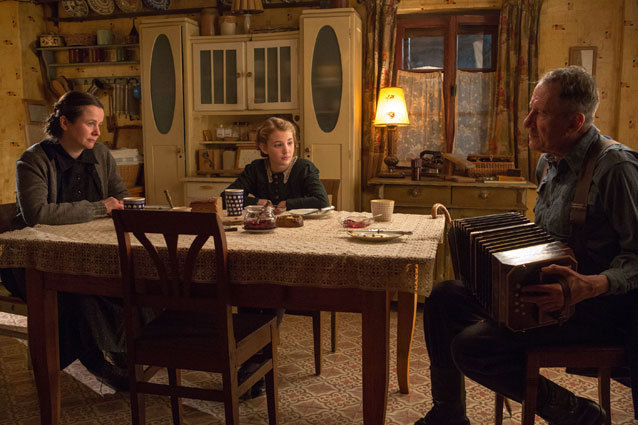
“The Book Thief” (2013) The Hubermanns’ at home

The narrative voice of Death is a teacher, a guide and storyteller. Death transcends time and place, encouraging us to think about topics in a way we are unaccustomed to, allowing the reader to learn about themselves through the narrative. It is a process with no definitive outcome. It is the punishment and reward of living, a story of hope and the beauty of mankind despite humans ability to perform such horrors and destruction.Essentially the novel is a universal book because it appeals to our human psyche, our compassion and our sense of right and wrong; of injustice. No matter our background, our situation in life or where we come from, there is undeniably something for everyone in the novel. May it be the love of books, of music, of singing or reading and drawing. Of friendship and family and laughter, the narrative voice of Death cements all together through its brilliant storytelling.

The-Book-Thief-cover


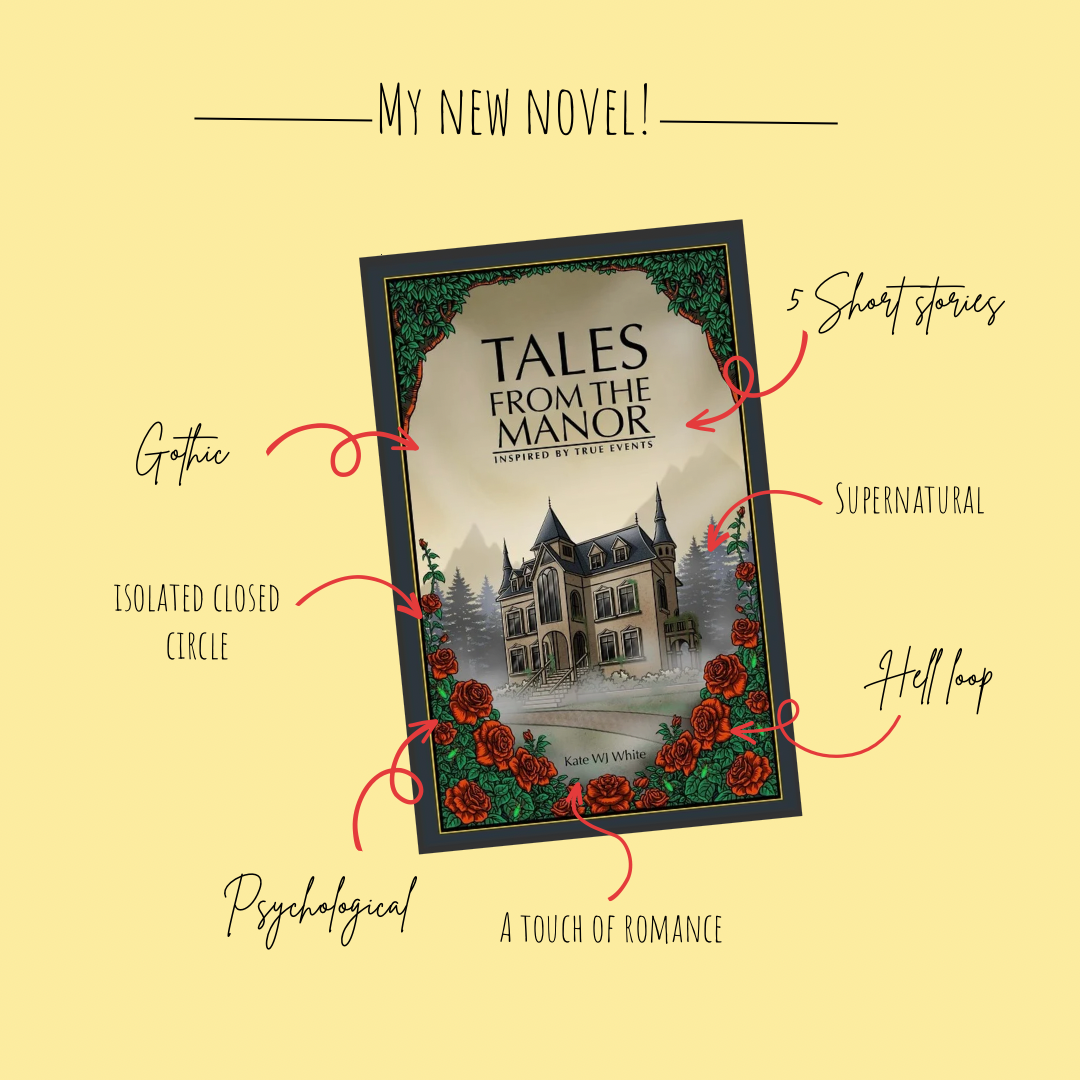
Exciting news! My new eerie short story collection ‘Tales from the Manor’ is available on Amazon! Check out my tabs above to get more info, free artwork, excerpts and more! ❤ Link below. Thank you friends.

https://www.amazon.co.uk/dp/B0DM43R7FT


Tales from the Manor’ tropes
Hardcover edition – matt texture
Full cover design & back cover

Copyright © 2014 by Kate W J White (All Rights Reserved)
The World of Edgar Allen Poe

Some of you may have heard of him, some of you may not. However, it is hard not to come across something he has influenced.

So why is Edgar Allen Poe so famous?

Firstly, he is said to be the inventor of detective fiction, inspiring young readers today with his portrayals of the gothic and horror genre. Secondly (and importantly for us writers), rather than to deliver a message, he believed a poem’s “first obligation is to create beauty through rhythm, rhyme, and visual imagery.” Not only are his stories eerie and terrifying, but they reach into the deepest recesses of the reader’s sub conscious and into the darkness of human nature.

His works explore the juxtaposition between madness and sanity, the dead and their power over the living, of love versus all consuming hate, as well as the inner exploration of the self. Perhaps Poe’s most famous poems include “The Raven” and “Annabel Lee”, and short stories such as “The Tell Tale Heart” and “The Murders at the Rue Morgue.” He was able to create such a variety of poetry and prose, appealing to a universal reader. They are dark, unsettling and macabre and it is hard to find another author who quite writes like he does.

“The Raven”


Perhaps my personal favourite is “The Masque of Red Death”. It is intriguing, captivating and rich with colour and imagery. While the plague rages on in the country, Prince Prospero locks up his castle and invites guests to enjoy themselves at a grand masquerade ball, a retreat away from the death outside his walls. We are introduced to an enchanting setting, where everything is opulent, gaudy with aspects of the grotesque. Each room is a different colour, decorated with silks and damask, under the rule of the selfish Prince. Before long, the red death is revealed by the figure of an unknown masquerade character, who having brought the plague into the walls of the castle and causes Death to all present; simply vanishes into nothing.

There’s something about it that reminds me of the “Phantom of the Opera”, of which there is a similar masquerade scene…

“Phantom of the Opera” (2004)


“That which you mistake for madness is but an over acuteness of the senses.” Many of Poe’s characters profess their “sanity” despite the cruelty of their actions- actions which are strategically planned and carried out, such as in the story “The Tell Tale Heart” first published in 1843.

Ranging from melancholy to despair- there is a certain mystery that surrounds his works, and an equal mystery associated with his death in Baltimore. Yet there is no denying it, there is something haunting about his writing, something that stays with you; a long time after you have turned the last page…

Fun Fact: If anyone is familiar with the film “Holes”, you will notice there is a scene where Kate Barlow is reciting a poem to her pupil. The character of Sam overhears it and starts to quote…

“I was a child and she was a child,

In this kingdom by the sea;

But we loved with a love that was more than love-

I and my Annabel Lee-“


You got it! It’s Poe once again-

Do you have a favourite of Poe’s work? Have you seen the film adaptation called “The Raven”?

Beautiful Books Review

LeatherBound Classics

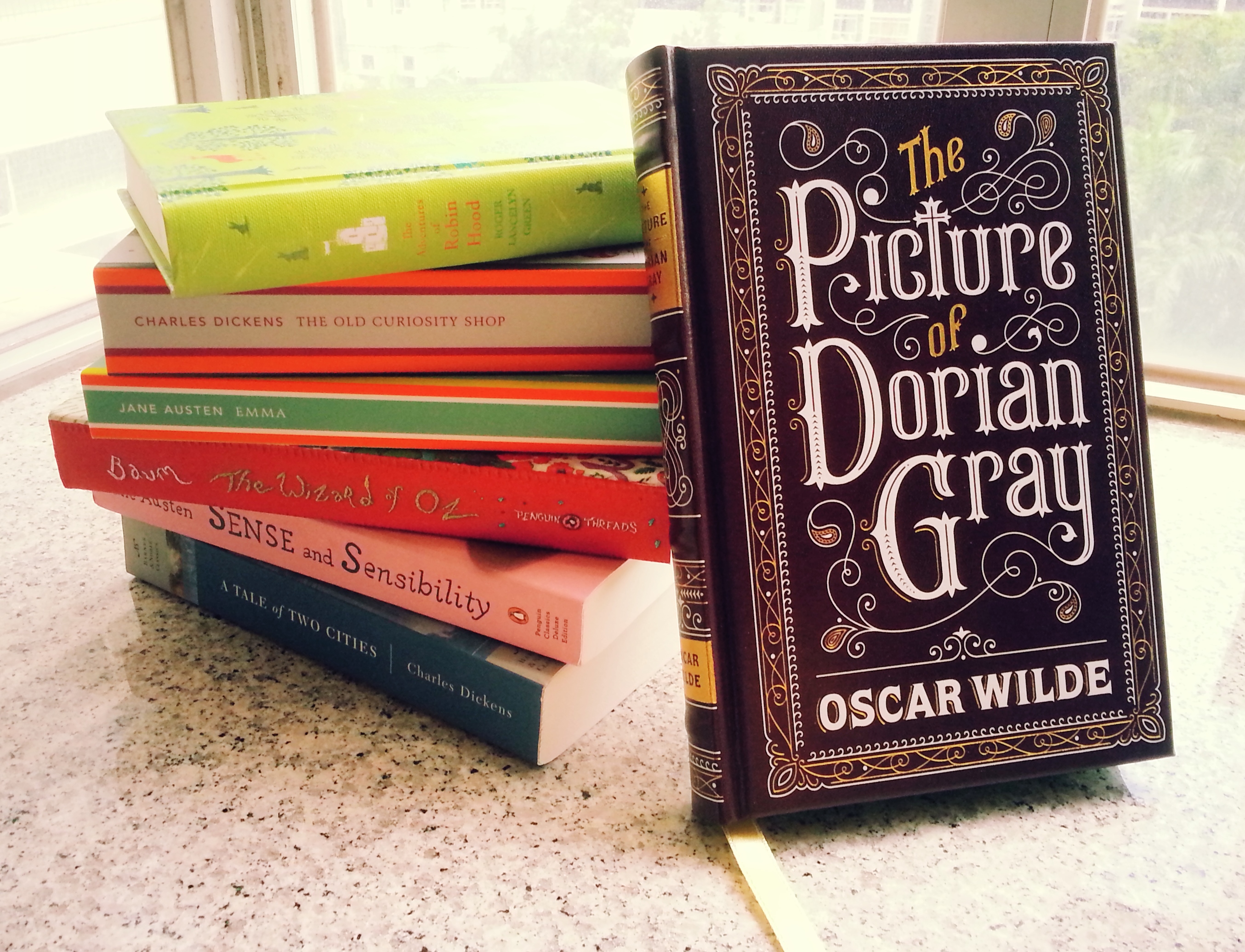
The Leather Bound classics collection are like something out of a dream. They are something you would find in Belle’s library in the Beast’s castle, the smell of leather, as you sit curled up in an old armchair by the fire. The pages are thick and of good quality, not only is the binding immaculate with a great front cover design but there is a matching silk ribbon to hold your place.

I can’t stop staring at them.

Did I mention they change their shades under different lighting? You will have to see for yourself…

Dracula

Cover aside, the first thing that surprised me reading it, was how it was completely unlike the film, or what the modern day audience associate with Dracula.

IMG_20140622_204322The narrative is in the form of journal and diary entries and interestingly enough, the character of Dracula, whom the book is named after- only appears a few times in the novel. It’s about the lives of the others he touches, much like ‘Oliver Twist’, that are the main focal point. At the start, the narrative is unsettling, as if you are running in inescapable circles in the castle of Count Dracula trying to find your escape.

We are introduced to characters such as Van Helsing, the famous vampire hunter and trust me when I say this- nothing about the book is sexually explicit, that the films are so keen on portraying. Count Dracula is an all powerful being that can bend the elements to his will, turn into any creature, scale up walls like a giant crab, transform into sand and float through keyholes, appear as mist, and influence the minds of animals and humans alike. He feasts on his victim every night while they are asleep, returning to the same victims until, eventually, so drained of blood they die, turning them into second generation vampires. Though they have the fear of garlic and stakes through the heart, killing a vampire seems much harder if they are blessed with super strength, cunning and have thousands of years of knowledge on how to survive. Much like an immortal superhero villain.

Terrifying huh?

The Picture of Dorian Gray

If you have read Oscar Wilde’s short stories such as “The Selfish Giant” and “The Happy Prince”, you assume The Picture of Dorian Gray will be similar in writing style – it’s not.

20140619_122102 dorian gray

Though the sentimentality is there, the novel takes on the whimsical reflections of the author, often philosophical which might put many readers off at first glance. For me, it is the concept which draws me to the novel. You get sentences which really resonate such as; “he watched it with that strange interest in trivial things that we try to develop when things of high import make us afraid”- a feeling that I for a long time tried to express into words but failed. They apply to a universal reader and often I found myself thinking, ‘ah yes, I agree!’

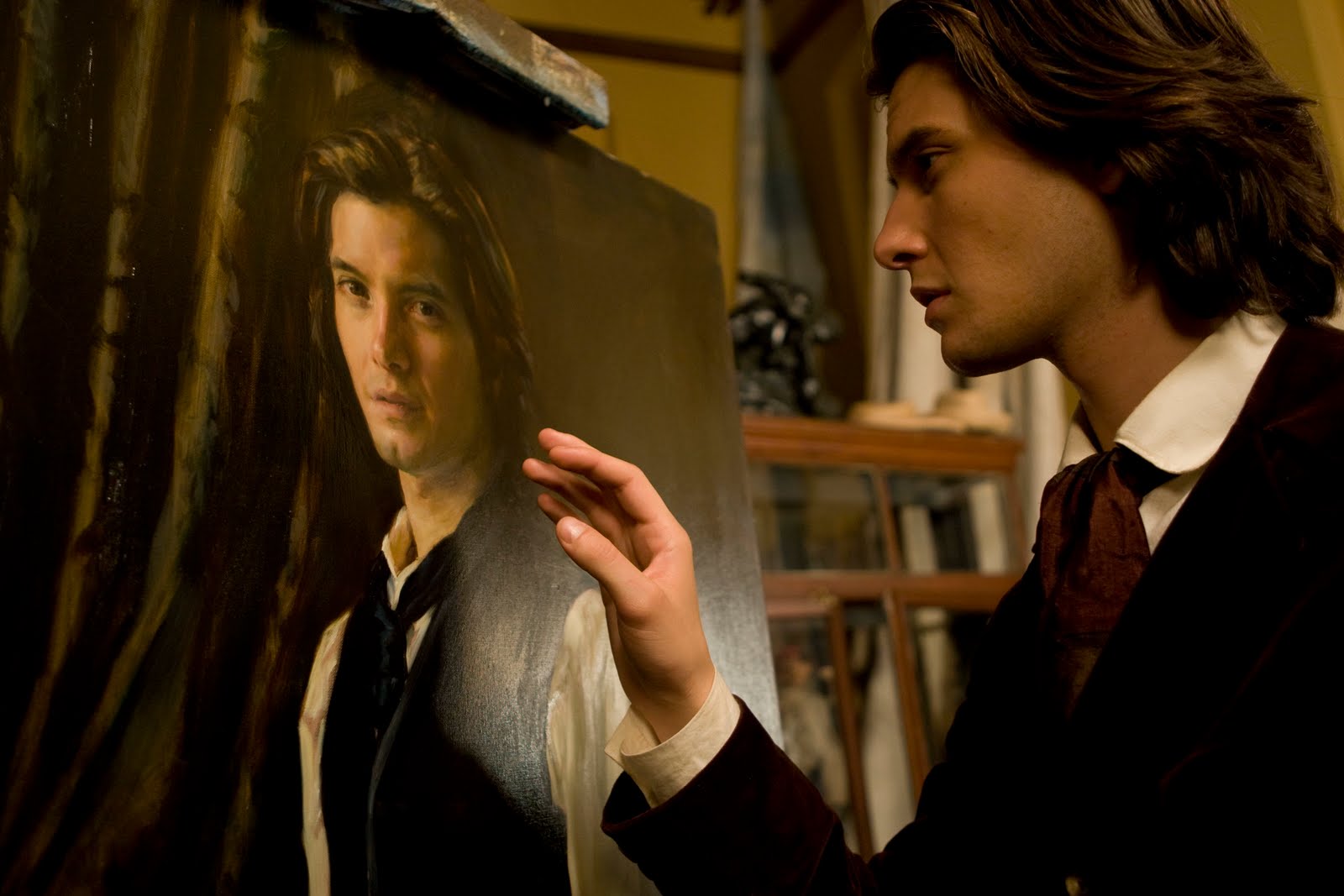
I first saw the film adaptation of this, before I read the book. Possible error? Maybe not. First of all, Ben Barnes is great in the role of Dorian Gray. He captures the character’s youth and inexperience, but also the darkness of the character’s gradual change throughout the novel brilliantly. As the actor reflects; it is “a morality tale about eternal youth, ageless beauty, self indulgent pleasure seeking and the pitfalls you might fall into if you pursued them so relentlessly.” Dorian Gray depicts human nature and the danger of this ‘pleasure seeking’ which ultimately leads to self destruction.

Though I would suggest to read the book first, in this case; you couldn’t go wrong with reading & watching the film together. They go hand in hand to bring visuals to life which otherwise might be hard to imagine from the book alone. However, like most film adaptations, there are events that do not correspond with the novel and if you want ‘accuracy’ it is best to take it with a pinch of salt.